
Business
Copper prices surge 50%A combination of geopolitics policy shifts.
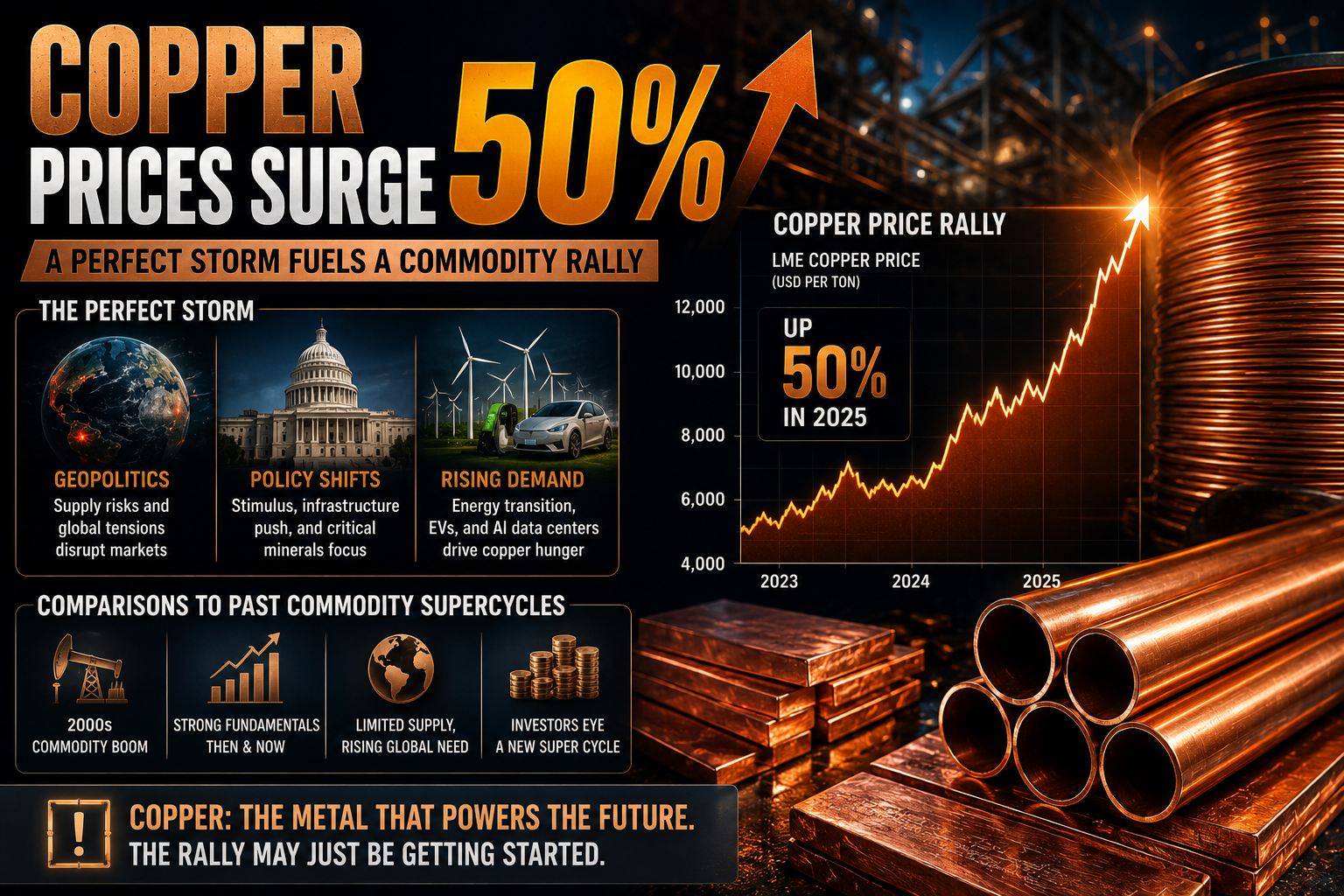
Copper prices surge 50% as supply concerns, geopolitical shifts and rising demand fuel a rally reminiscent of past commodity supercycles.

The Numbers
Copper has had one of the wildest runs of any major commodity this year. A year ago, prices were around $4.25/lb — by early August 2026, US copper futures climbed to roughly $6.90/lb, an all-time high, after LME copper broke above $13,000/ton (peaking near $13,387–$13,842/ton in January). That’s a roughly 60-65% rise year-over-year. Copper had already gained nearly 44% in 2025, its best year since 2009.
Why It’s Surging — Four Overlapping Forces
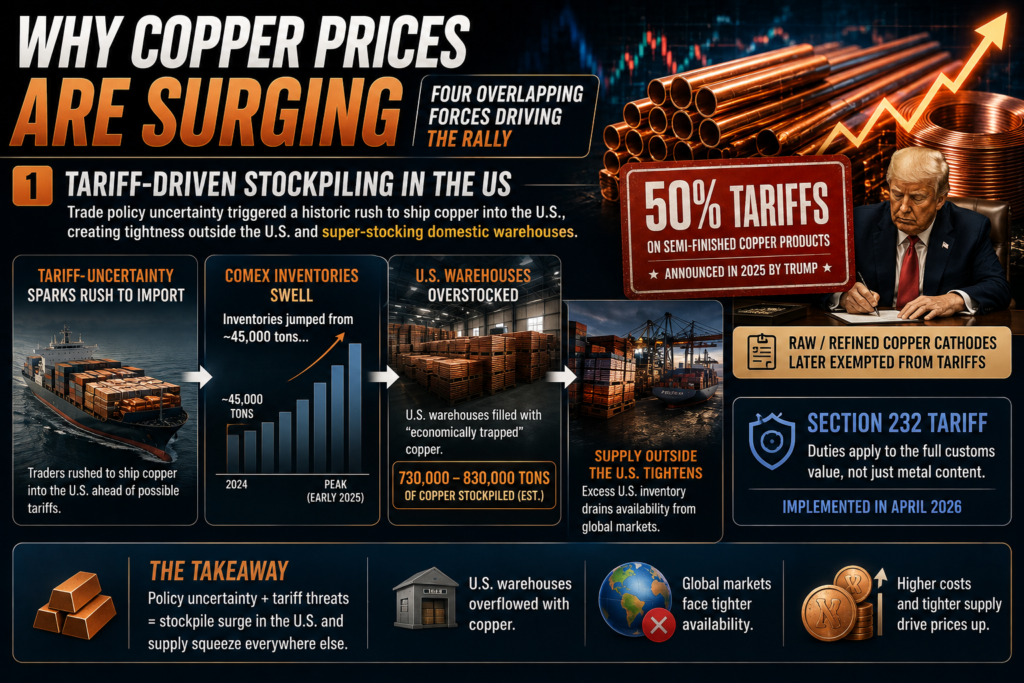
1. Tariff-driven stockpiling in the US
Trump signed a proclamation for 50% tariffs on semi-finished copper products in 2025, though raw/refined cathodes were later exempted. That uncertainty triggered a rush to ship copper into the US ahead of possible duties — COMEX inventories swelled from ~45,000 tons to a brief high, then U.S. warehouses became so stuffed with “economically trapped” metal (730,000–830,000 tons by one estimate) that supply outside the US tightened sharply. A further Section 232 tariff (applying duties to the full customs value, not just metal content) added cost pressure in April 2026.
2. AI and data centers
This is the story with the most staying power for your viewers: hyperscale AI data centers can use up to 50,000 tons of copper per facility, and AI/data-center demand alone is projected to hit 500,000 tons a year by 2030. Combined with electric vehicles and grid modernization, S&P Global forecasts total copper demand jumping from 28 million tons in 2025 to 42 million tons by 2040 — a 50% increase — creating a possible 10-million-ton supply shortfall if new mines don’t come online.
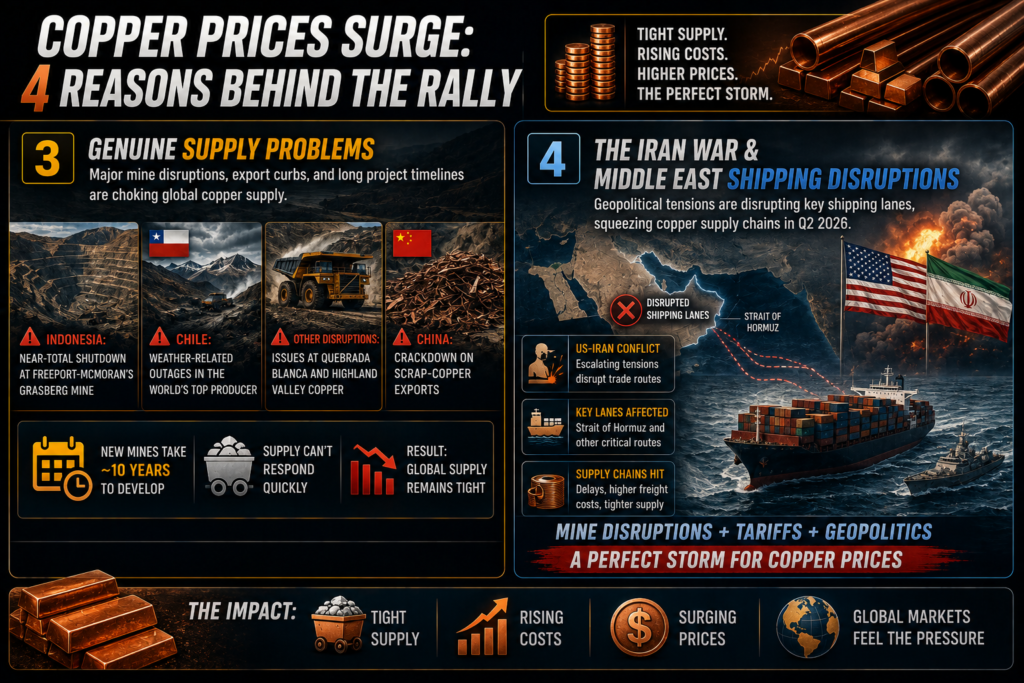
3. Genuine supply problems
Major mines have been hit by real disruptions: a near-total shutdown at Freeport-McMoRan’s Grasberg mine in Indonesia, weather-related outages in Chile (the world’s top producer), and issues at Quebrada Blanca and Highland Valley Copper. New mines take roughly 10 years to develop, so supply can’t respond quickly. China’s crackdown on scrap-copper exports has added further strain.
4. The Iran war and Middle East shipping disruptions
The closure of shipping lanes tied to the US-Iran conflict (the same story driving oil prices — see topic 1) has also squeezed copper supply chains in Q2 2026, compounding the tightness from mine disruptions and tariffs.
The Skeptic’s Case — Not Everyone Buys the Rally
This is a good “on the other hand” beat for a segment:
- Analysts at StoneX and Bank of America have said the move is driven more by supply fears, tariff hedging, and speculative momentum than by real-time physical scarcity — one analyst called the rally “unsustainable.”
- Goldman Sachs actually forecasts prices sliding back toward $11,000/ton by year-end once tariff uncertainty resolves, projecting a 160,000-ton global surplus.
- One mining analyst put it bluntly: “mining companies are pushing a compelling long-term shortage narrative — and the market believes it,” suggesting belief has outpaced fundamentals.
- LME inventories did see a sharp single-day increase in mid-August as trading firm Trafigura moved metal back into exchange warehouses, and futures pulled back from record highs on profit-taking.
Why It Matters Beyond Traders
Copper is nicknamed “Dr. Copper” because it’s historically used as a barometer for overall economic health — it’s in power grids, construction, wiring, and electronics. But several analysts note that this rally looks less like a “healthy economy” signal and more like a supply-and-policy story, making the old “Dr. Copper” read harder to trust right now.










Business
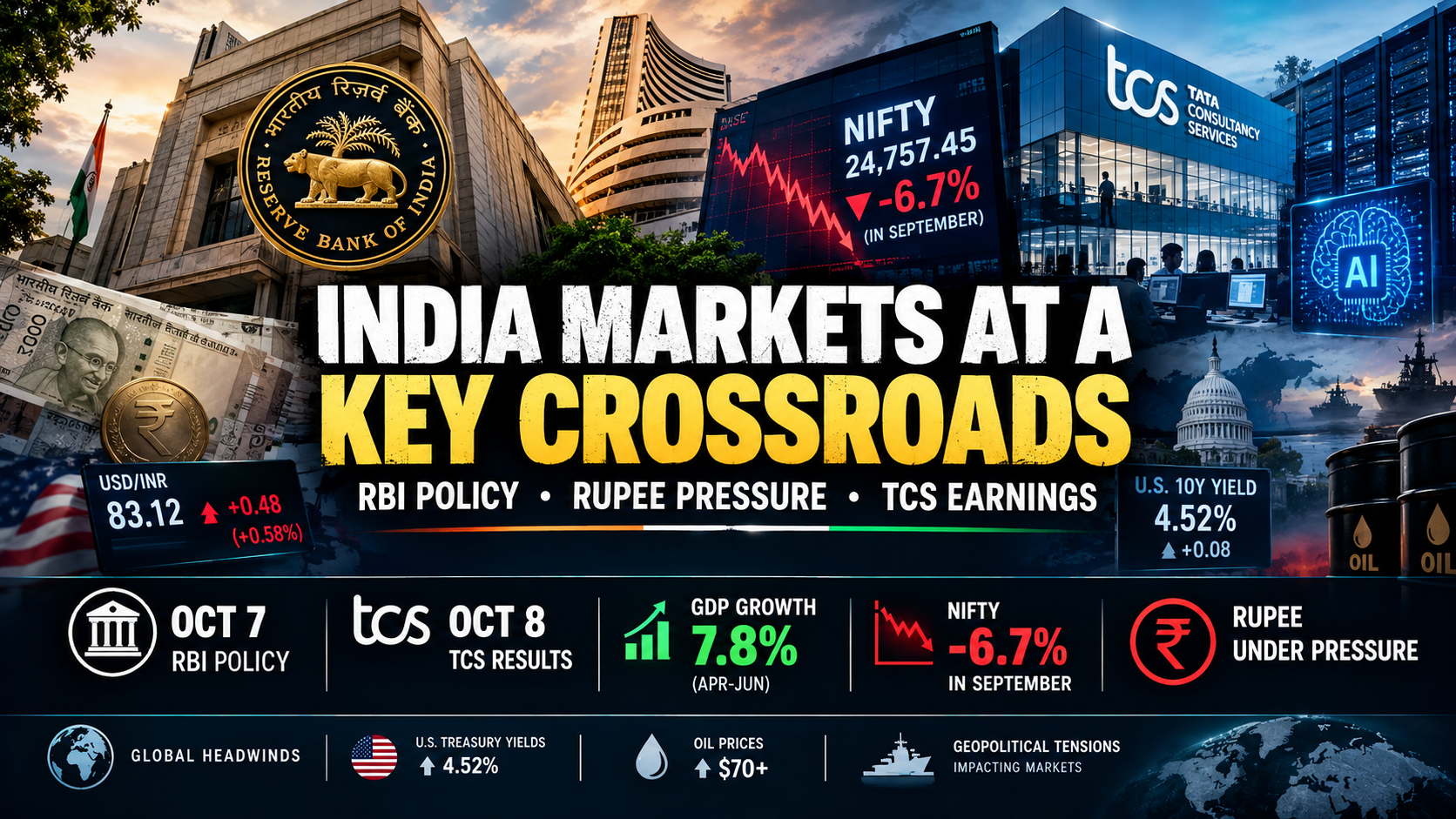
India: RBI policy, rupee and IT earnings
India’s markets face a crucial week as the RBI policy decision and TCS earnings approach, while rupee weakness and global pressures weigh on the Nifty.
Business
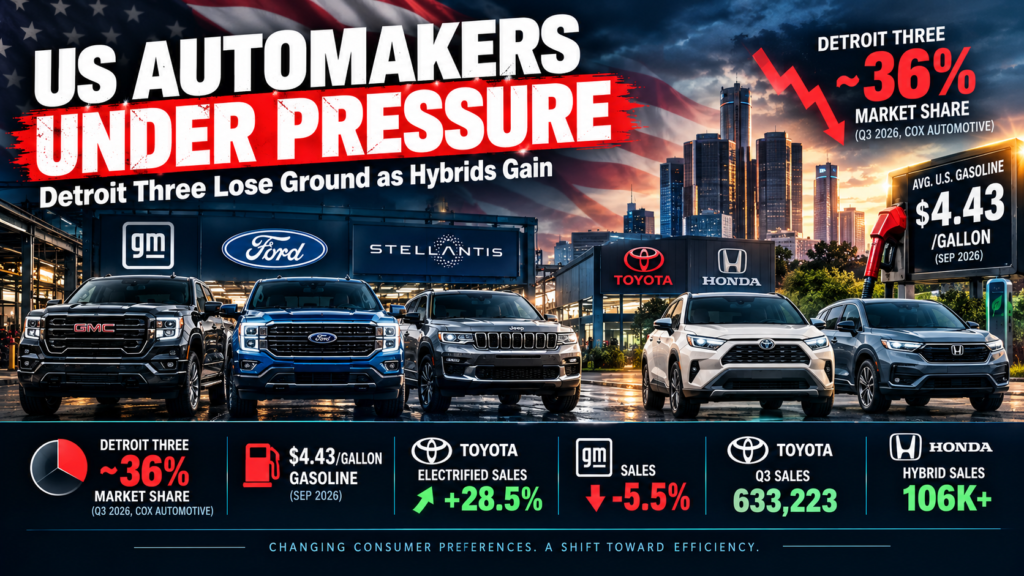
Pressure on US automakers. Reuters reports that GM, Ford and Stellantis could see their combined US market share dip to 36% for the quarter
GM, Ford and Stellantis could see their combined U.S. market share fall to around 36%, highlighting growing pressure on Detroit’s biggest automakers.

Detroit Three Slip to Record-Low US Market Share as Gas Prices Drive Buyers to Hybrids
GM, Ford and Stellantis are heading for their weakest US showing on record. Cox Automotive estimates their combined third-quarter market share at around 36%, an all-time low, while hybrid-heavy Asian brands including Toyota and Honda are expected to account for more than half of new vehicle sales.
The driver is fuel costs. The Iran war has pushed US gasoline to a national average of $4.43 a gallon in September, according to AAA, up from $3.20 a year earlier, and buyers are turning to hybrids and more efficient models.
Toyota is the clearest winner. Its electrified sales climbed 28.5% to 363,367 units, or 57.4% of its US sales, and its Corolla hybrid jumped nearly 36%. GM kept the top US sales spot, but its lead over Toyota shrank to 37,751 vehicles, and Cox has said Toyota could overtake GM in the coming years if the trend continues. GM’s quarterly sales fell 5.5% to 670,974 units. Honda posted a record hybrid quarter of more than 106,000 units, with sales up 9.3%. Stellantis sales were roughly flat at 324,277.
Ford is under particular pressure. Cox expects its sales to fall 8.8% through the first three quarters of the year, with its market share dropping nearly a full point to 12.5%. Cox also forecast that Hyundai Motor Group would outsell Ford for the first time, 511,421 vehicles to 504,172, though Ford argues that Hyundai and Kia are separate companies and that it outsold the two combined year to date.
Overall US sales for the quarter are estimated at about 4.1 million, down about 1% from a year earlier. The average new-vehicle transaction price rose 1.9% to $50,089 in August.
What to watch: Ford’s reported third-quarter sales, gasoline prices, and whether Detroit’s automakers shift more of their production toward hybrids.
Business
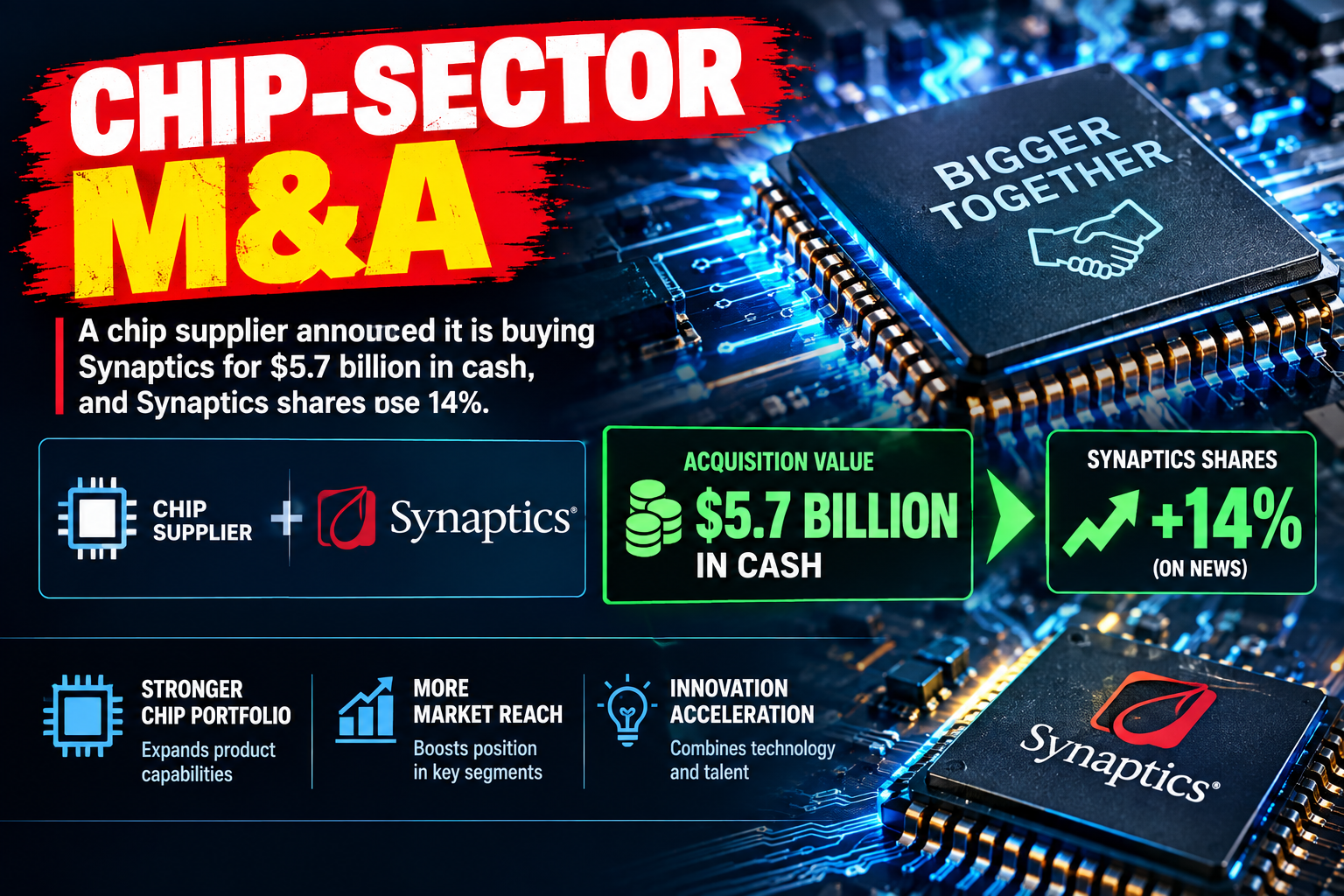
Chip-sector M&A. A chip supplier announced it is buying Synaptics for $5.7 billion in cash
Synaptics shares jumped 14% after a chip supplier announced a $5.7 billion all-cash deal to acquire the company.
onsemi Switches to $5.7 Billion All-Cash Deal for Synaptics After Rival Bid Surfaces
Shares of Synaptics jumped about 14% after chipmaker onsemi (ON Semiconductor) agreed to buy it in an all-cash deal valued at about $5.7 billion. The revised agreement, announced late Thursday, October 1, pays $123 per share in cash and replaces the all-stock deal the companies signed on June 25, which was valued at about $7 billion.
The change followed competing interest. A filing shows Synaptics had received an unsolicited, non-binding proposal from another strategic party, which likely drove the renegotiation. Synaptics’ board unanimously concluded that the amended deal remains in shareholders’ interests.
Shares of Synaptics opened more than 14% higher on Friday, moving close to the cash offer. The stock had closed at $106.15 the previous day. onsemi shares rose about 6% in premarket trading from a prior close of $80.08, with investors welcoming that the cash structure avoids issuing new shares that would have diluted existing holders.

Under the original agreement, Synaptics holders were to receive 1.350 onsemi shares for each share they own. The new deal will be funded with cash on hand and about $2.45 billion in committed debt financing from Morgan Stanley. onsemi expects the acquisition to add to its non-GAAP earnings per share immediately, and has identified $200 million of annual run-rate synergies.
The deal still needs approval from Synaptics shareholders and regulators, with completion expected by mid-2027. It came amid a broader rally in semiconductor stocks.


Spain’s train crash and upcoming election. Spain is dealing with its second deadly train crash this year.

Hong Kong’s Tai Po fire fallout. Leader John Lee apologized

Serbia’s media shake-up. The head of public broadcaster RTS resigned after the student list won an election.

Generation Z Is Killing Fast Fashion in India — And Building Something Far More Beautiful in Its Place

AR Rahman reacts to “anti-national” row over Imtiaz Ali’s Main Vaapas Aaunga

According to Dior Couture, this taboo fashion accessory is back

-

 Entertainment14 hours ago
2026 is a big year at the box office
-

 Entertainment15 hours ago
Ramayana Part 1 arrives this week.
-

 Entertainment15 hours ago
Rajinikanth’s Jailer 2 enters the top 20.
-

 Entertainment15 hours ago
Bigg Boss 20 drama. Manoj Tiwari defended his daughter
-

 Entertainment14 hours ago
Other Diwali releases. Nayanthara’s Mookuthi Amman .