
Fashion
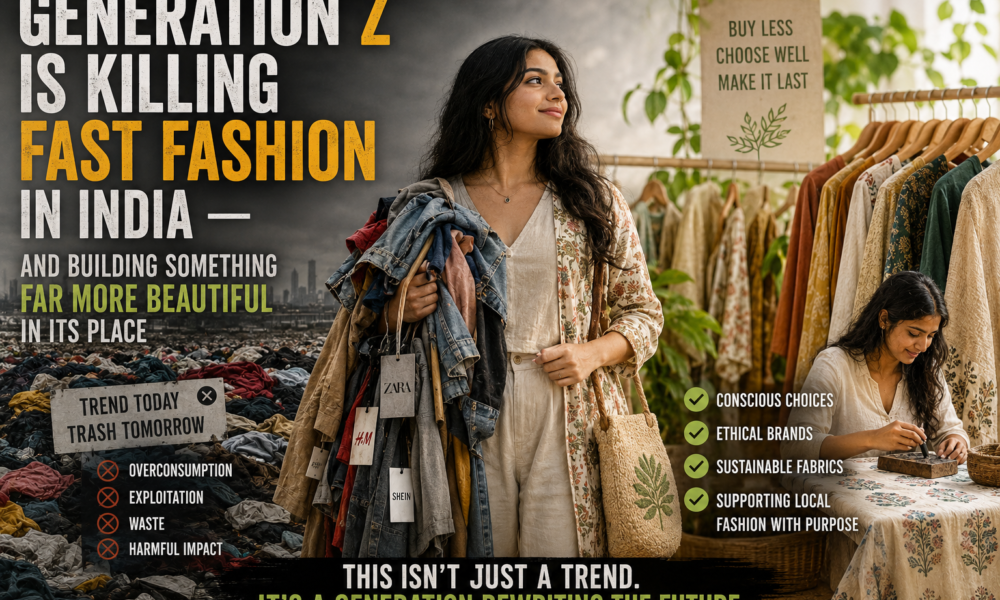
Generation Z Is Killing Fast Fashion in India — And Building Something Far More Beautiful in Its Place

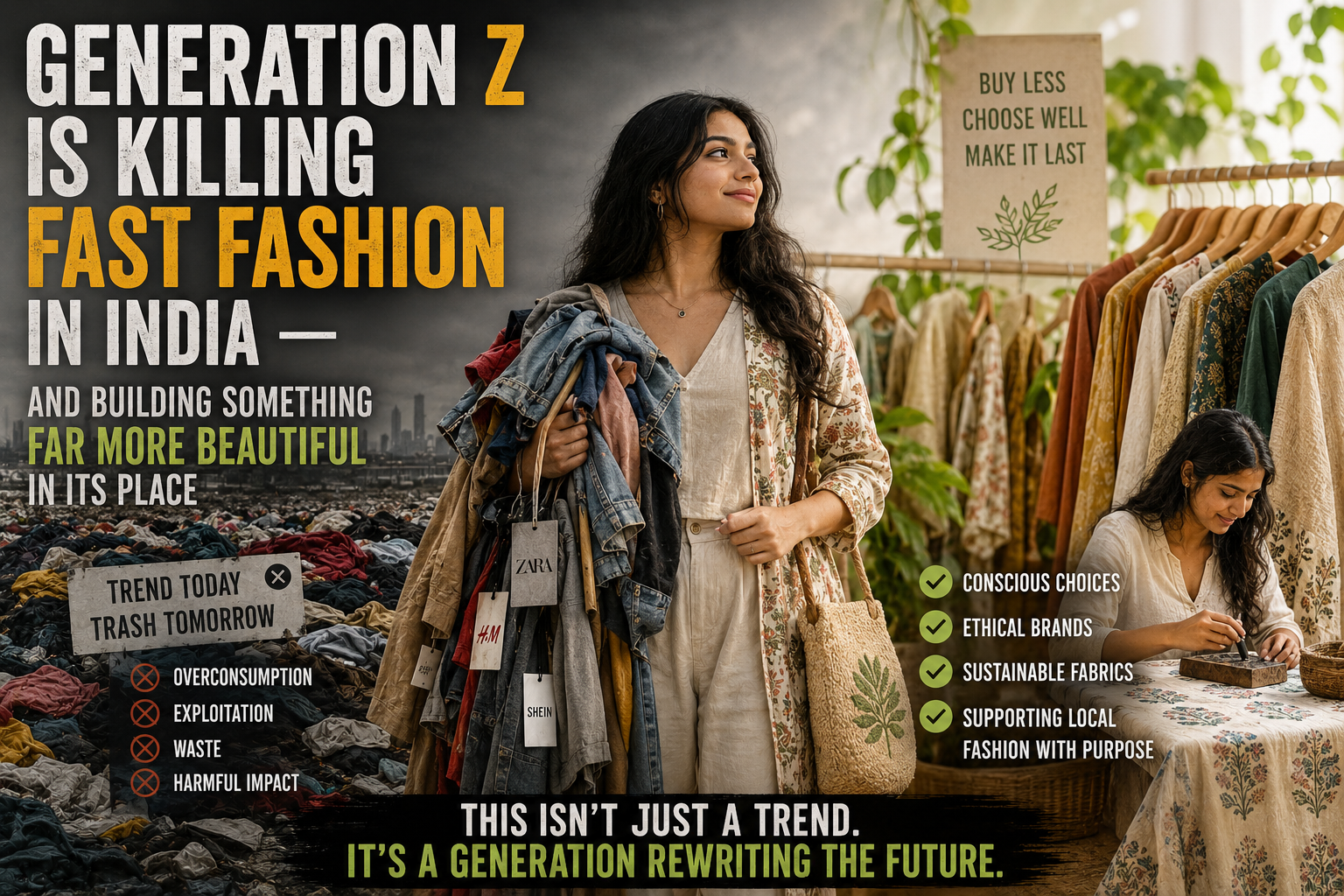
India’s Gen Z is not just changing what people wear — they are changing why people buy, how long they keep it, and who they buy it from. Across the country, a fashion revolution driven by the under-25 generation is dismantling decades of fast fashion culture and replacing it with something more conscious, more creative, and far more lasting. GIN Fashion Desk | May 8, 2026 | Fashion · Sustainability · Youth
The numbers tell the story clearly. Gen Z now accounts for 47 per cent of India’s total fashion and lifestyle spending — making them the single most powerful consumer force in the country’s fashion market. Yet unlike previous generations that chased logos and labels, this generation asks fundamentally different questions before they spend a rupee: Who made my clothes? Was it fair? Is it biodegradable? Will it last beyond one season?
Sustainability is no longer a marketing angle for Gen Z — it is a non-negotiable filter. Studies show that 64 per cent of Indian Gen Z consumers are willing to pay premium prices for sustainable fashion, and 75 per cent say environmental and ethical concerns now guide their fashion choices more than brand names. A striking 81 per cent say a brand’s actions and reputation have directly changed their buying decisions.
Thrifting has evolved from a budget necessity into a full cultural statement. Pre-loved fashion platforms like Curated Findings, Relove, and Luxepolis have surged in popularity across India. The secondhand and luxury resale market is forecast to grow two to three times faster than the firsthand market through 2027. For Indian Gen Z, wearing something vintage is no longer settling — it is a flex. “Thanks, it’s vintage” has become one of the most powerful things you can say about an outfit.
Thrift-flipping — buying secondhand garments and redesigning them — has exploded across YouTube and Instagram in India. Painted denim jackets, custom distressed jeans, hand-printed kurtas, and reassembled saree silhouettes tell deeply personal stories. The practice combines creativity with sustainability and represents the DIY design spirit that defines this generation’s relationship with clothing.
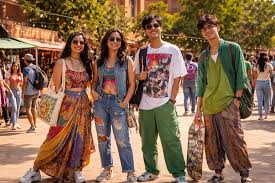
Indian Gen Z has also invented its own signature style identity: the desi-streetwear fusion. Kurtas paired with chunky sneakers. Sarees styled with crop tops. Jhumkas worn with streetwear hoodies. Low-rise jeans paired with choli tops. Baby tees combined with lehenga skirts. These unexpected combinations feel fresh while remaining rooted in Indian culture — a wardrobe language that is entirely their own and entirely original.
Brands that fail to meet this generation’s sustainability expectations are being abandoned without hesitation. Fashion for Good and Arvind Limited launched their Future Forward Factories India initiative in 2026, targeting a 93 per cent reduction in greenhouse gas emissions from textile manufacturing. Brands like Nicobar, Okhai, No Nasties, HUEMN, and Almost Gods are winning Gen Z loyalty by prioritising handloom revival, ethical labour, natural dyeing, and unisex styling. The message is clear: India’s next fashion era will be built on values, not vanity.
Key Facts Box:
- Gen Z share of India fashion spending: 47%
- Willing to pay premium for sustainability: 64%
- Social media influences their buying: 90%
- Brand actions changed buying decisions: 81%
- Secondhand market growth forecast: 2-3x faster than firsthand by 2027
- Top Sustainable Indian Brands: Nicobar, Okhai, No Nasties, HUEMN
- Top Platforms: Curated Findings, Relove, Luxepolis
- Desi Streetwear Key Look: Kurta + chunky sneakers, saree + crop top







Fashion
Weight-Loss Drugs Reshaping the Beauty Industry
GLP-1 medications are driving a new beauty and wellness economy as consumers seek products and treatments alongside their weight-loss journeys.
The Core Shift
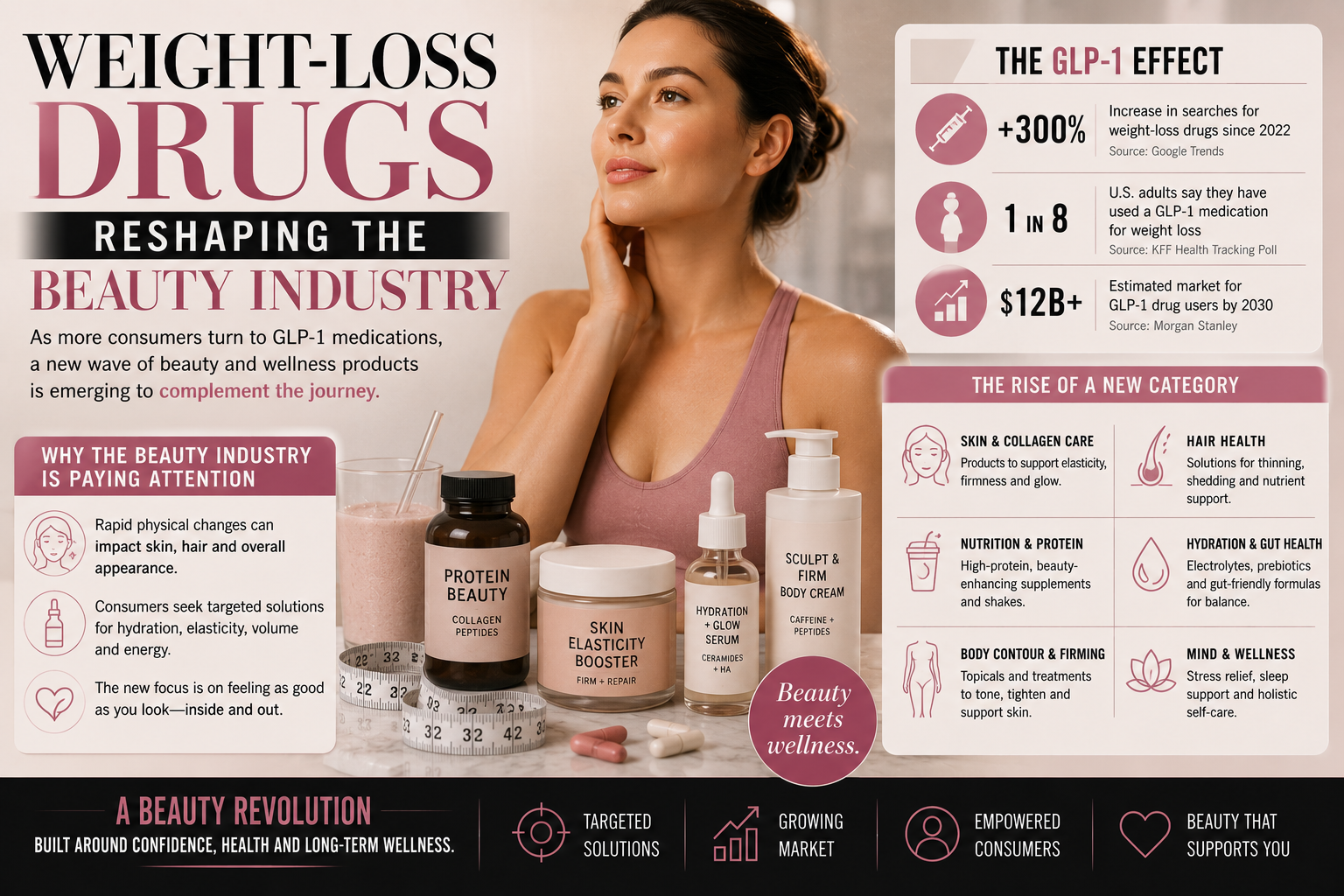
GLP-1 receptor agonist drugs like Ozempic and Wegovy are reshaping beauty needs, driving demand for products targeting skin laxity, hair loss, and emotional well-being. Trend forecasting agency WGSN calls this a structural shift rather than a short-term spike, validating the emergence of a dedicated GLP-1 beauty and wellness category. The medication works by slowing digestion and curbing cravings, leading to significant weight loss — but this rapid change also affects facial structure and skin quality, creating entirely new consumer needs.
“Ozempic Face” — The Clinical Reality
The phenomenon has a clinical name in dermatology circles: “Ozempic face,” characterized by volume depletion and cutaneous laxity from rapid weight loss. These volumetric changes from loss of facial fat can accelerate skin aging by altering skin quality — manifesting as uneven tone, hyperpigmentation, and decreased luminosity and skin firmness.
How Big This Is, By the Numbers
- GLP-1 prescriptions for weight loss rose 587% from 2019 to 2024, and among patients using them specifically for weight management rather than diabetes, the increase was a staggering 1,961%.
- Monthly semaglutide prescriptions grew fivefold in just three years — from roughly 472,000 fills in January 2021 to more than 2.5 million by December 2023.
- An estimated 63% of weight-loss-drug patients now seeking facial treatments have never set foot in a cosmetic clinic before — meaning this is creating an entirely new customer base for the beauty industry, not just upselling existing clients.
- Nearly 13% of US adults — roughly one in eight — are currently using GLP-1 medications, with usage potentially climbing to 25 million people by 2030, up from around 5 million just a few years ago.
Where the Money Is Going
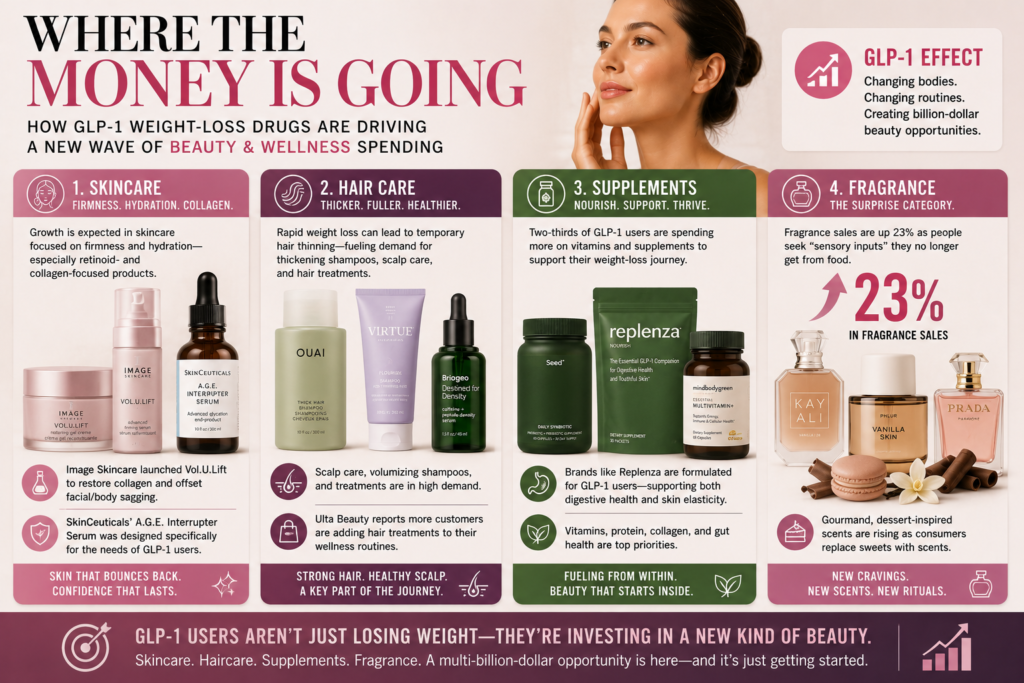
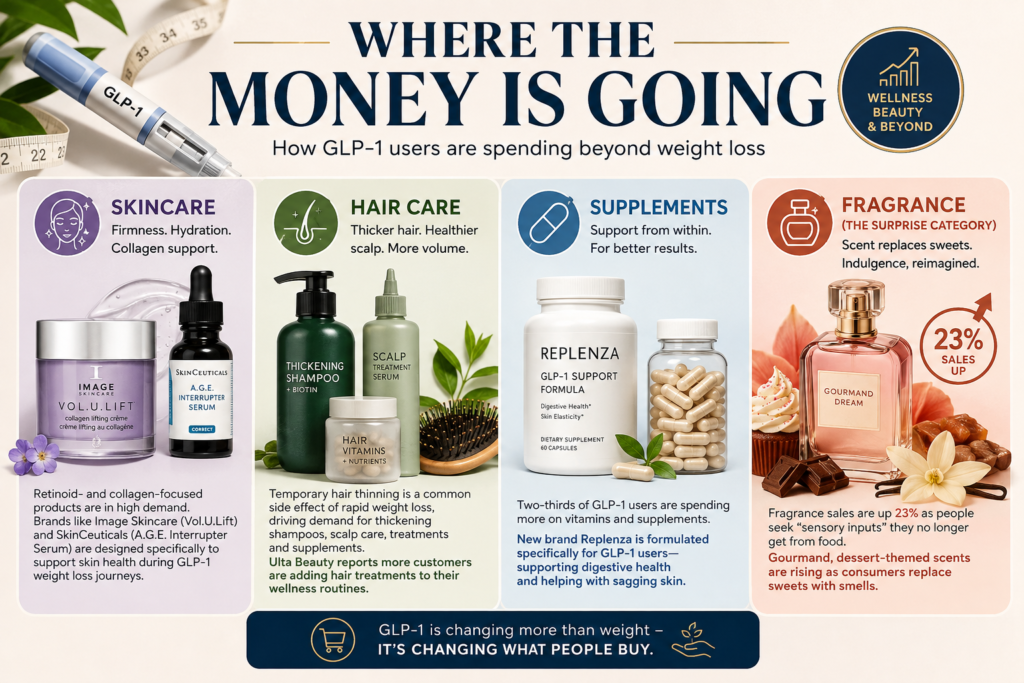
Skincare: Growth is expected in skincare positioned around firmness and hydration — retinoid- and collagen-focused products in particular. Real product examples: Image Skincare launched Vol.U.Lift specifically to restore collagen and offset facial/body sagging, with co-owner Dr. Marc Ronert noting he’s “witnessing firsthand the surge in GLP-1 usage for weight loss—and the unexpected impact it has on skin health,” and SkinCeuticals’ A.G.E. Interrupter Serum was designed specifically to meet the emerging cosmetic and health needs of GLP-1 users.
Hair care: Demand is rising for haircare like thickening or volumizing shampoos and scalp care, since temporary hair thinning is a common side effect of rapid weight loss, driving a fast-growing market for hair treatments, supplements, and scalp therapies. Ulta Beauty has specifically noted a rise in customers buying hair treatments alongside broader wellness products.
Supplements: Two-thirds of GLP-1 users have increased their spending on health products like vitamins and supplements to support their weight-loss journey. A new supplement brand, Replenza, was formulated specifically with GLP-1 users in mind — targeting both digestive health and sagging skin.
Fragrance (the surprise category): Fragrance sales are up 23% as people seek “sensory inputs” they no longer get from food, with gourmand, dessert-themed perfumes specifically rising as consumers replace sweets with scents.
The Counterculture Angle — “Faux-zempic”
WGSN has identified a counter-trend they’ve dubbed “Faux-zempic” — a growing counterculture appealing to pharma-hesitant consumers, driving demand for natural weight-support supplements, lymphatic tools, and slower, systems-based wellness alternatives. This is a great secondary angle: not everyone is on the drugs, but the aesthetic and wellness expectations they’ve created are shaping products even for people avoiding pharmaceuticals.
The Emotional/Identity Dimension
WGSN’s strategic advice to brands is to reposition beauty as “emotional infrastructure” — for consumers undergoing rapid body change, beauty becomes a coping mechanism, confidence amplifier, and identity stabilizer, bridging the gap between physical transformation and sense of self.
Why It’s a Great Story for Your Channel
This has universal appeal beyond fashion-industry insiders — it touches health, pharma, consumer behavior, and body image all at once, and the “first-time cosmetic clients” and “Ozempic face” angles are genuinely surprising, shareable facts.
Fashion
Devil Wears Prada 2 Costume Auction — For Charity
Iconic fashion from The Devil Wears Prada 2 is going under the hammer, with proceeds from Christie’s auction supporting journalism and fashion charities.
The Basics
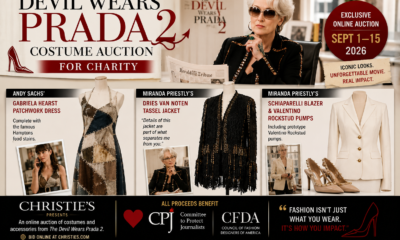
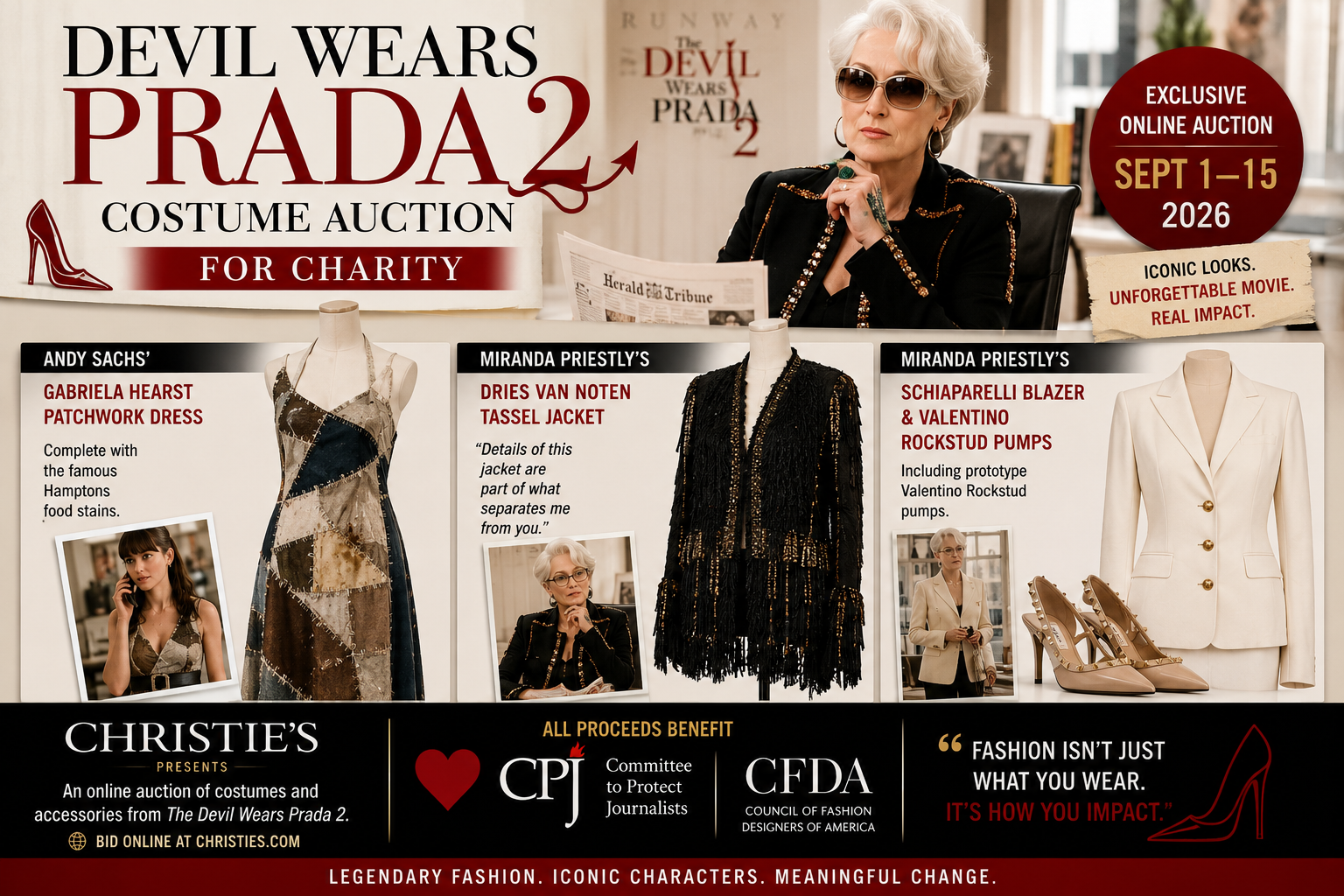
Christie’s is taking Miranda Priestly’s closet to the auction block again — twenty years after costumes from the original film were sold on eBay, clothes and accessories from the sequel are getting a somewhat grander treatment. The online sale runs September 1–15 on christies.com, with pieces worn by Meryl Streep, Anne Hathaway, Emily Blunt, Stanley Tucci, Simone Ashley, and Lady Gaga. The sale is titled “A Million Girls Would Kill for These Things” and was conceived with Streep herself. The auction is expected to raise more than $1 million for charity.
It’s a Streep Tradition
Streep has done this before — in 2006, she came up with the idea of auctioning costumes from the first movie, with wardrobe sold on eBay to benefit Dress for Success, including a Valentino silk chiffon blouse, a Bill Blass pinstripe suit, and Christian Louboutin shoes. Fun trivia: not everything made it to auction that first time — Hathaway was so attached to Andy Sachs’ vintage green makeover-montage coat that her then-boyfriend bought it for her at a promotional event, prompting her to joke, “OK, you’re off the hook for my birthday.
The Standout Lots
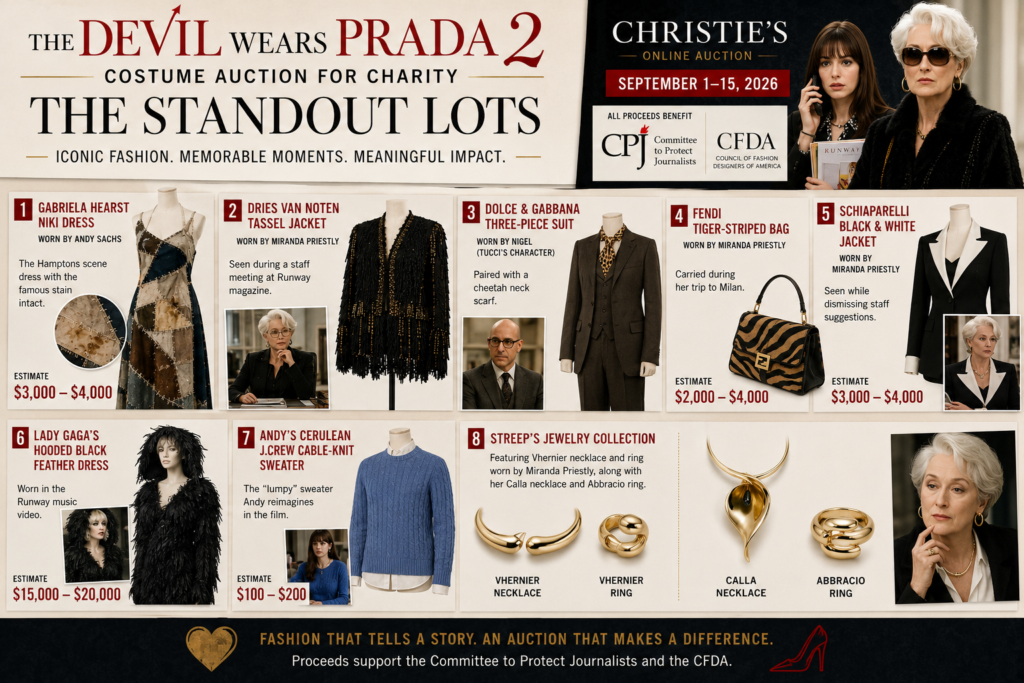
- The Gabriela Hearst Niki dress that Andy Sachs stains during a Hamptons scene — offered with the stain intact — carries an estimate of $3,000 to $4,000.
- Miranda Priestly’s Dries Van Noten tassel jacket, worn during a staff meeting at Runway, is estimated at $4,000 to $6,000.
- A Dolce & Gabbana three-piece suit with cheetah neck scarf worn by Tucci’s character is estimated at $2,000 to $3,000.
- The tiger-striped Fendi bag Priestly carries in Milan is estimated at $3,000 to $4,000, while the black-and-white Schiaparelli jacket she wears while dismissing staff suggestions carries a similar estimate.
- The two star lots connected to the film’s newcomers: Lady Gaga’s hooded black feather dress from the Runway music video is estimated at a striking $15,000 to $20,000.
- On the humble end, Andy’s reimagined cerulean sweater — the “lumpy” J.Crew cable-knit — is estimated at just $100 to $200, a nice contrast to the high-glamour pieces.
- Also included: a Vhernier necklace and ring worn by Streep, plus her character’s Calla necklace and Abbracio ring.
Beyond Clothing — There’s a Live Event Too
In addition to the online sale, Christie’s is hosting an invitation-only cocktail party and live charity auction at its New York location during New York Fashion Week on September 10, where fashion pieces and film-inspired luxury “experiences” will go under the hammer, with Rachel Koffsky Parker, Christie’s International Head of Handbags, serving as charity auctioneer. Committee to Protect Journalists
The Cause — And Why It Fits the Film
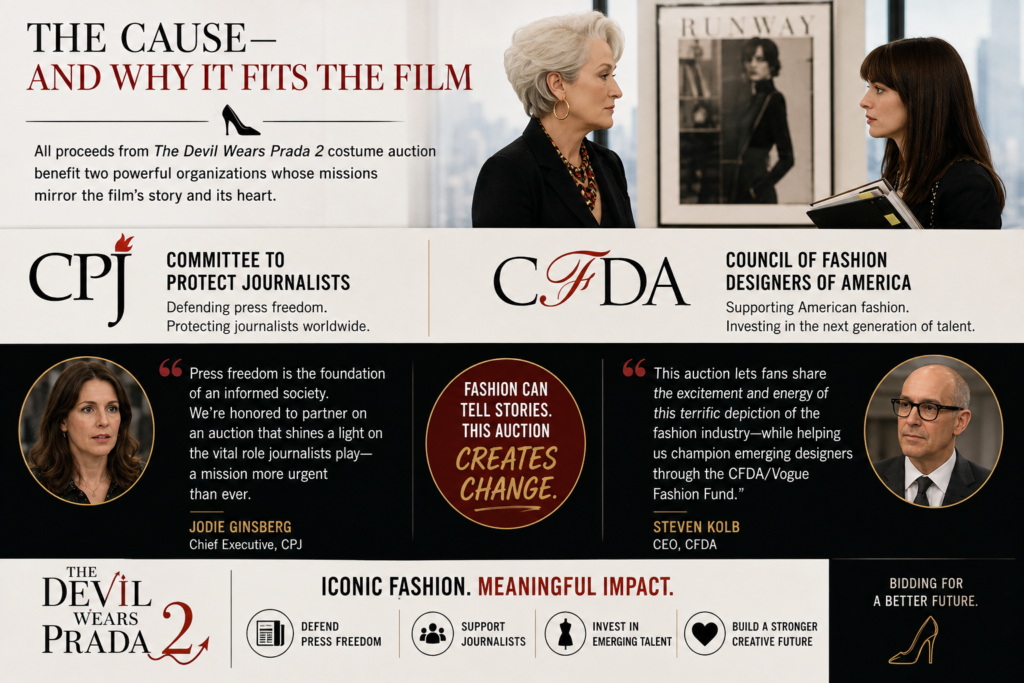
All proceeds benefit the Committee to Protect Journalists and the Council of Fashion Designers of America — causes the film’s story makes feel particularly apt. CPJ’s chief executive, Jodie Ginsberg, tied the partnership directly to press freedom, noting the group is honored to spotlight the vital role journalists play, given how urgent that mission has become. CFDA’s CEO Steven Kolb added that the auction lets bidders “share the excitement and energy of this terrific depiction of the fashion industry” while supporting the CFDA’s efforts to back emerging design talent through the CFDA/Vogue Fashion Fund. Style RaveCouncil of Fashion Designers of America
Box Office Context
The sequel premiered in April 2026 to a $691 million global box office, making it one of the year’s most significant cultural events across fashion, film, and entertainment simultaneously.
Public Viewing
A free public exhibition of select highlights will be on view at Christie’s New York (20 Rockefeller Plaza) from September 8–13 — right in the middle of New York Fashion Week, giving it natural crossover buzz with the fashion calendar.
Fashion
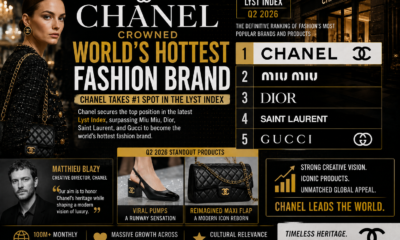
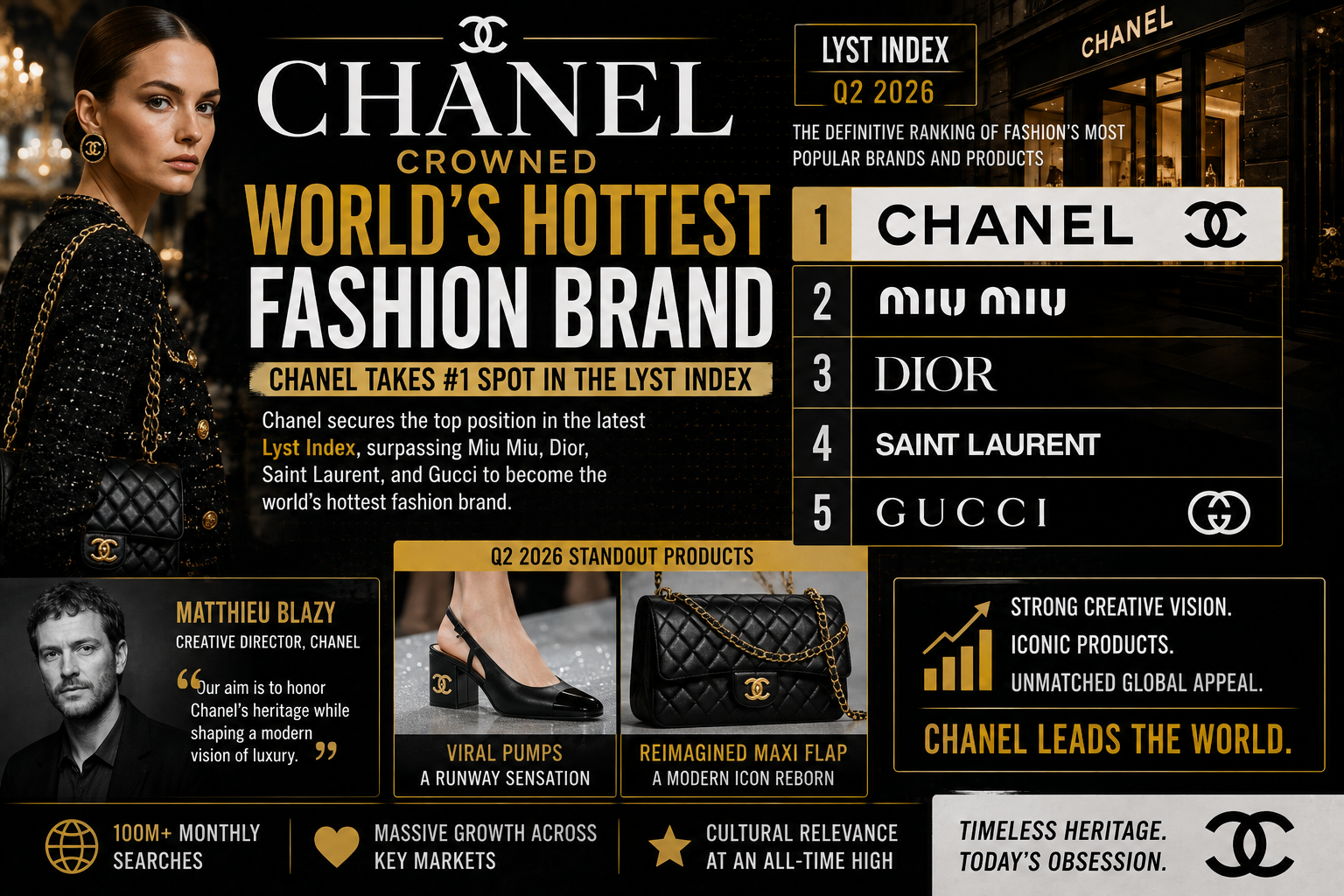
Chanel Crowned World’s Hottest Fashion Brand
Chanel has topped the latest Lyst Index, with Matthieu Blazy’s creative direction helping propel the iconic fashion house back to the forefront of global fashion.
Chanel’s Three-Peat at the Top
Chanel retained the number one position for the third consecutive quarter, aided by Matthieu Blazy’s established creative momentum. The result also comes during Blazy’s first full year as Chanel’s Artistic Director of Fashion Activities — his Spring/Summer 2026 debut introduced a fresh interpretation of the house’s codes, balancing exceptional craftsmanship with lightness, modern proportions and wearability, and his first Métiers d’Art collection continued that direction.
The Dua Lipa Wedding Dress Moment
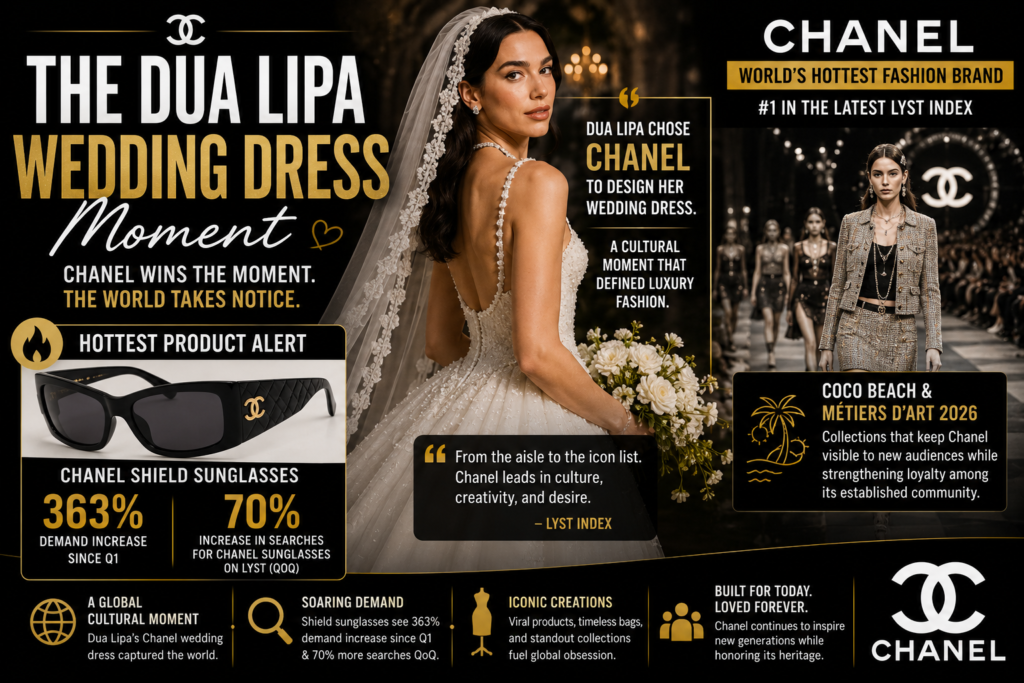
The biggest cultural driver: Chanel benefited from a major moment that captured enormous attention in luxury fashion — Dua Lipa chose Chanel to design her wedding dress. On top of that, Chanel’s Shield sunglasses appeared on the hottest products list with a 363% demand increase since Q1, and searches for Chanel sunglasses on Lyst grew 70% quarter over quarter. The house’s Coco Beach and Métiers d’Art 2026 collections kept Chanel visible to new audiences while retaining loyalty from its established customer base.
Miu Miu Climbs to No. 2
Miu Miu climbed two places to number two, riding a 30% increase in demand for crochet bags, sunglasses, and its ongoing New Balance collaboration with tennis player Coco Gauff.
Massimo Dutti’s Breakout Quarter — The Bella Hadid Effect
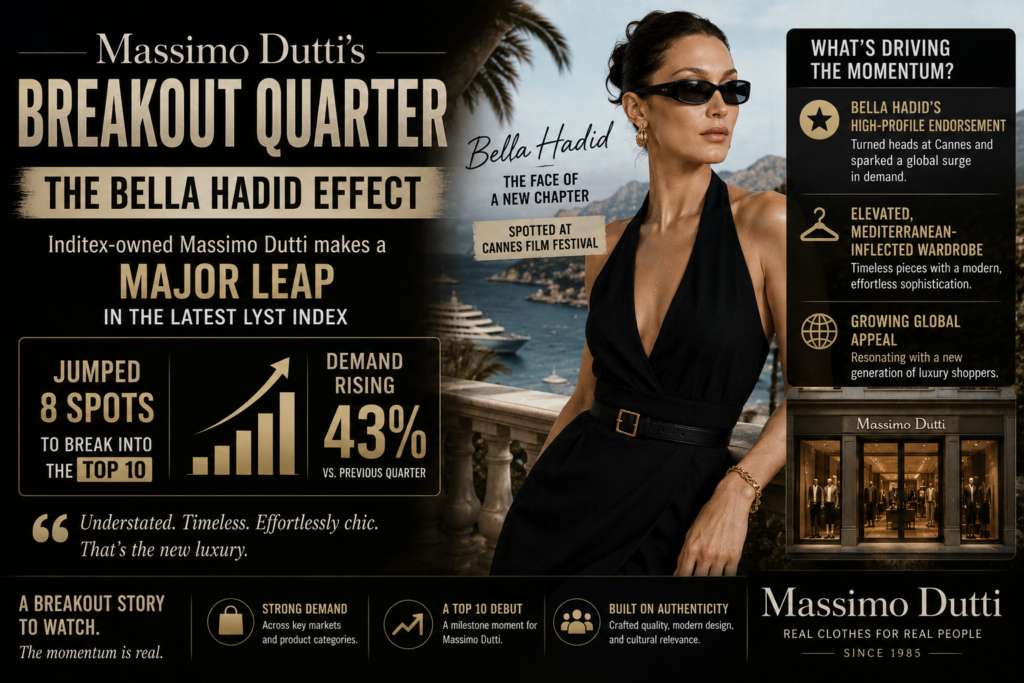
One of the most interesting stories in the report: Inditex-owned Massimo Dutti jumped eight spots to break into the top 10, with demand rising 43%, driven by Bella Hadid’s high-profile endorsement during the Cannes Film Festival, alongside growing appetite for its elevated, Mediterranean-inflected wardrobe.
Phoebe Philo’s Notable Debut
Phoebe Philo’s namesake label entered the Lyst Index for the first time at 18th place, with a 29% rise in demand, reflecting growing momentum behind the designer’s expanding retail strategy, especially in the Asia-Pacific region.
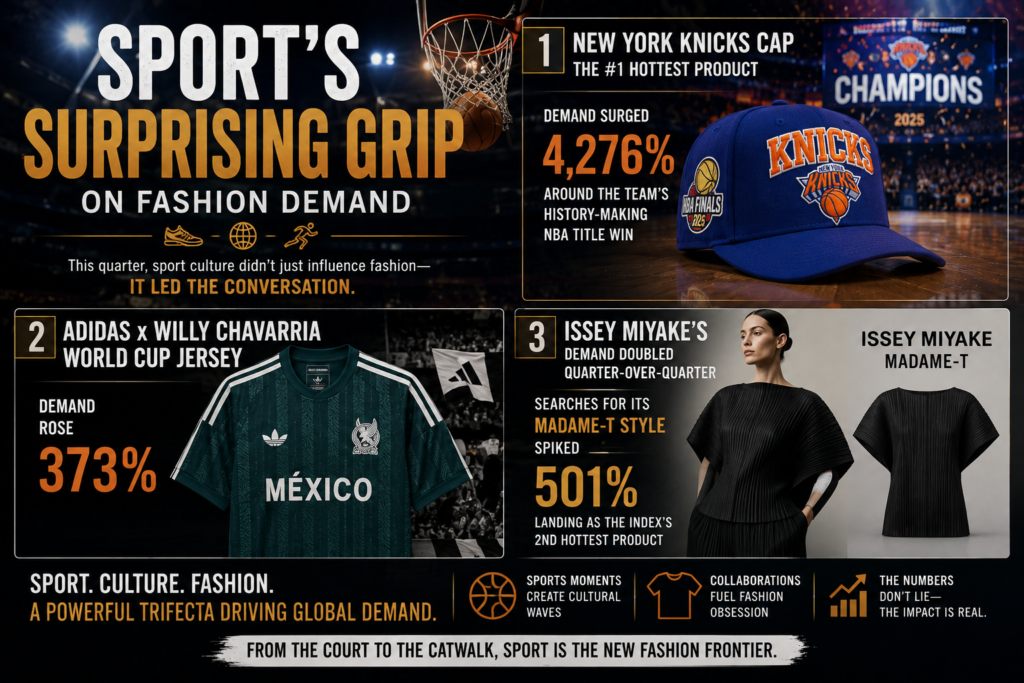
Sport’s Surprising Grip on Fashion Demand
This quarter’s biggest twist was how heavily sport culture shaped fashion desire:
- A New York Knicks cap claimed the number-one hottest product position after demand surged 4,276% around the team’s history-making NBA title win.
- The adidas x Willy Chavarria World Cup jersey rose 373% in demand.
- Issey Miyake’s demand doubled quarter-over-quarter, helped by a 501% spike in searches for its Madame-T style, which landed as the index’s second hottest product this quarter.
Broader Luxury Market Context
Luxury overall is technically back to growth, though unevenly — LVMH’s fashion and leather division grew for the first time in two years, up just 1% to €9.01 billion; Kering posted its first positive quarter in three years, up 2%, with Gucci’s decline narrowing from 8% to 2%; and Hermès stayed in its own category, up 6.7% to €8.2 billion with a 41.1% margin.
Why This Story Works for Your Channel
This gives you two strong angles: the glossy celebrity-driven storyline (Dua Lipa’s Chanel wedding dress, Bella Hadid’s Massimo Dutti moment at Cannes) plus a genuinely surprising data trend (sports fandom — an NBA championship cap outselling luxury handbags in search demand) that’s relatable to a broader, non-fashion-obsessed audience too.


Apple’s foldable “iPhone Ultra” and Chrome’s Manifest V2 extension cutoff

Amazon expanding drone delivery to ~500 US cities

Google’s $12.2 billion stake deal with Marvell

Generation Z Is Killing Fast Fashion in India — And Building Something Far More Beautiful in Its Place

AR Rahman reacts to “anti-national” row over Imtiaz Ali’s Main Vaapas Aaunga






Jawn Staff
July 7, 2017 at 2:50 pm
Quis autem vel eum iure reprehenderit qui in ea voluptate velit esse quam nihil molestiae consequatur, vel illum qui dolorem eum fugiat quo voluptas nulla pariatur.