
Business
Reddit’s Q2 earnings beat, but stock drops
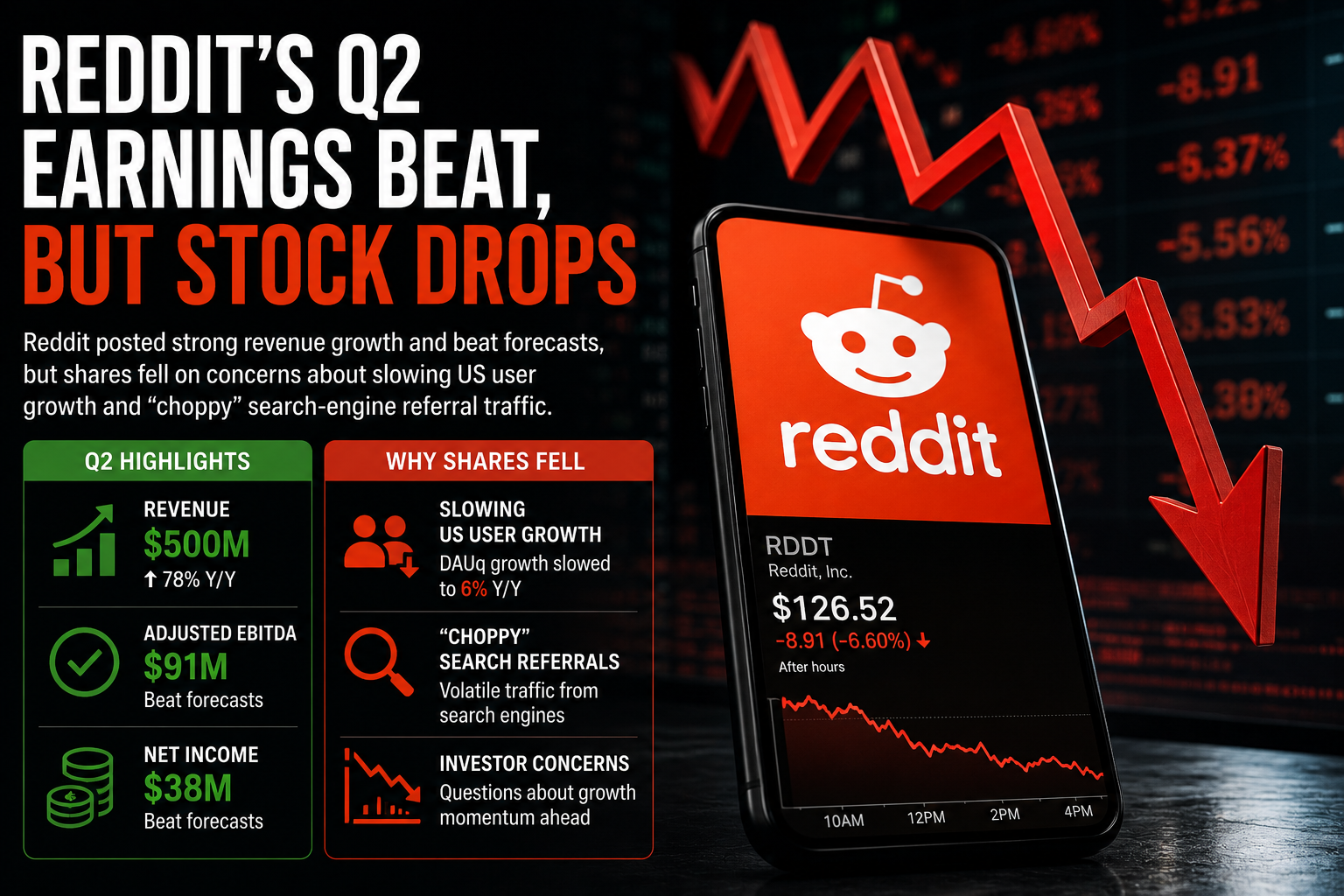
Reddit beat Q2 forecasts with strong revenue growth, but shares dropped as investors worried about slowing U.S. user growth and volatile search-engine referrals.

The Numbers Were Genuinely Strong
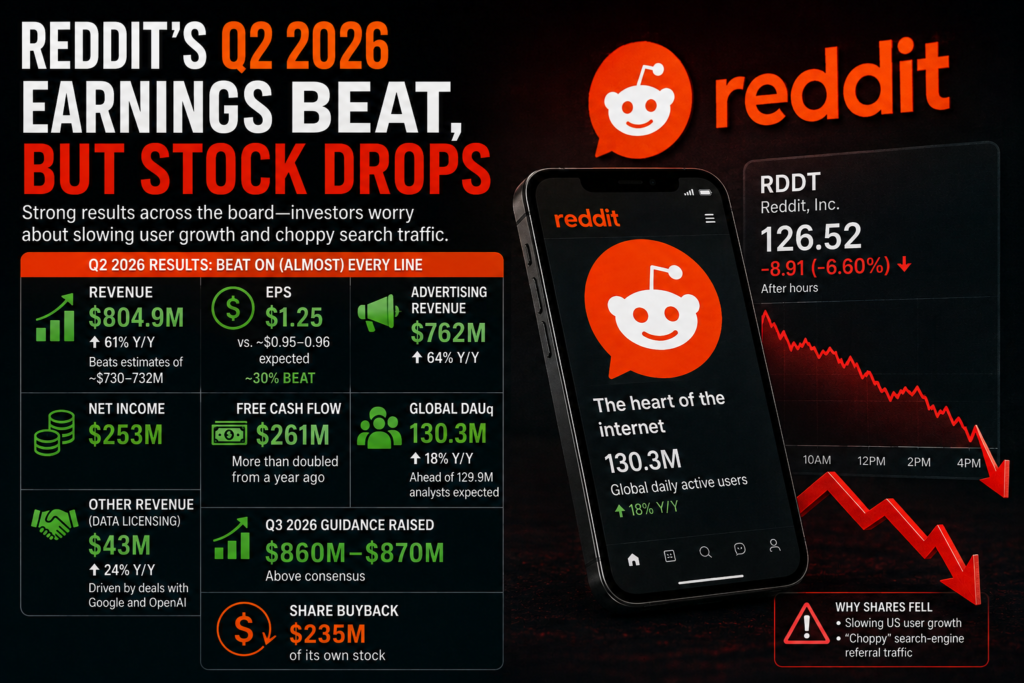
Reddit reported second-quarter 2026 results on July 30 that beat Wall Street on almost every line:
- Revenue: $804.9 million, up 61% year-over-year — beating estimates of ~$730–732 million
- EPS: $1.25 vs. ~$0.95–0.96 expected (a ~30% beat)
- Advertising revenue: $762 million, up 64% year-over-year
- Net income: $253 million; free cash flow: $261 million, more than doubled from a year ago
- Global daily active users (DAUq): 130.3 million, up 18% year-over-year — ahead of the 129.9 million analysts expected
- Data licensing (“Other revenue”), driven by deals with Google and OpenAI, grew 24% to $43 million
- Reddit even raised its Q3 guidance to $860–870 million, above consensus, and bought back $235 million of its own stock
But the Stock Cratered Anyway
Despite the beat, shares fell somewhere between 10% and 23% depending on the trading session measured (initial after-hours drops of 12–13%, extending toward 20–23% in subsequent sessions) — reportedly Reddit’s largest single-day drop since its March 2024 IPO.
Why Investors Panicked: Three Threads
1. “Choppy” search referral traffic
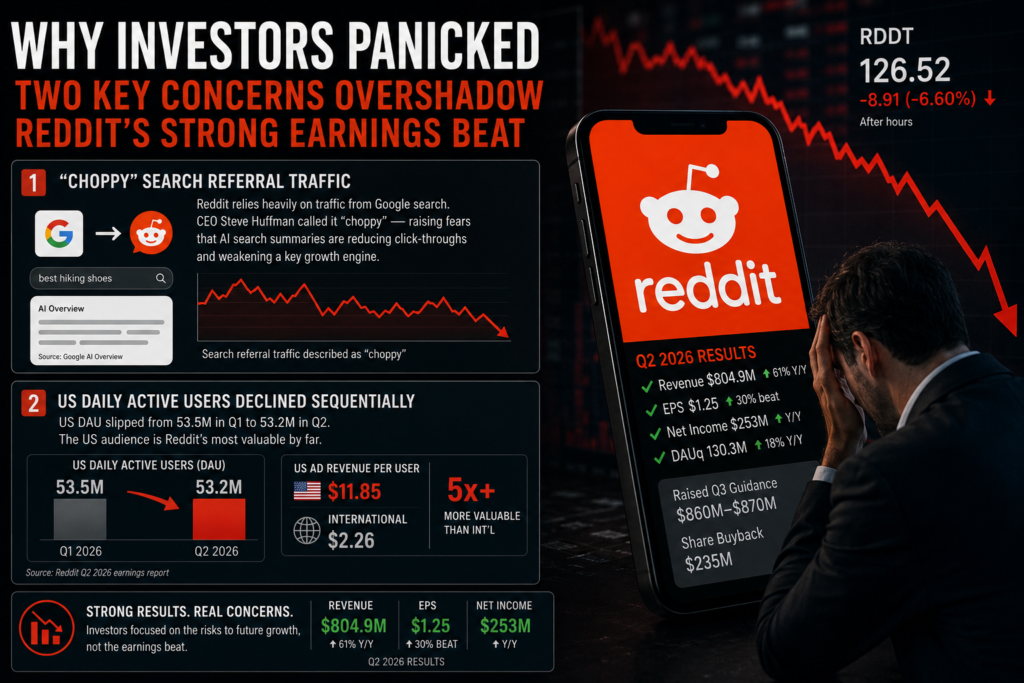
CEO Steve Huffman used the word “choppy” to describe how much traffic Reddit gets from people clicking through from Google search results — and that single phrase in the investor letter reportedly moved the stock more than the earnings beat itself. Reddit built years of growth on Google search sending people to Reddit threads; as AI search summaries increasingly answer questions directly without a click-through, that funnel is a real structural risk.
2. US daily active users actually declined sequentially
This is the number that spooked people most: US daily active users slipped from 53.5 million in Q1 to 53.2 million in Q2 — a small dip in absolute terms, but symbolically important because the US audience is Reddit’s most valuable by far (US ad revenue per user was $11.85, versus just $2.26 internationally — more than 5x the value). Global growth looked fine only because international users picked up the slack.
3. Growth deceleration and reduced transparency
Revenue growth of 61% was actually a step down from Q1’s 69% — in a market pricing Reddit for near-perfection, “still great but slowing” got punished. Reddit also announced it will stop reporting logged-in vs. logged-out user metrics starting Q3 2026, which investors read as reduced transparency at exactly the moment they most want visibility into whether AI search is eating into the user base.
The Bigger AI-Era Tension
This ties into a broader story worth flagging for your segment: Reddit sits in an unusual position as both a victim and beneficiary of AI. It’s one of the most valuable data sources for training AI models (licensing deals with Google and OpenAI), and Huffman has publicly argued “there is no artificial intelligence without actual intelligence — and that comes from Reddit.” But at the same time, AI-powered search answers threaten the exact search-traffic pipeline that built Reddit’s audience in the first place — making it a good case study of AI’s double-edged effect on legacy internet platforms.

Analyst Take
Even after the plunge, the stock traded around 33x earnings for a company still compounding revenue at 61% with roughly 31% net margins — several analysts called that comparatively cheap, with the Street’s average price target implying meaningful upside. But the consensus caution is clear: investors want to see US daily users turn positive again before trusting the growth story fully.










Business
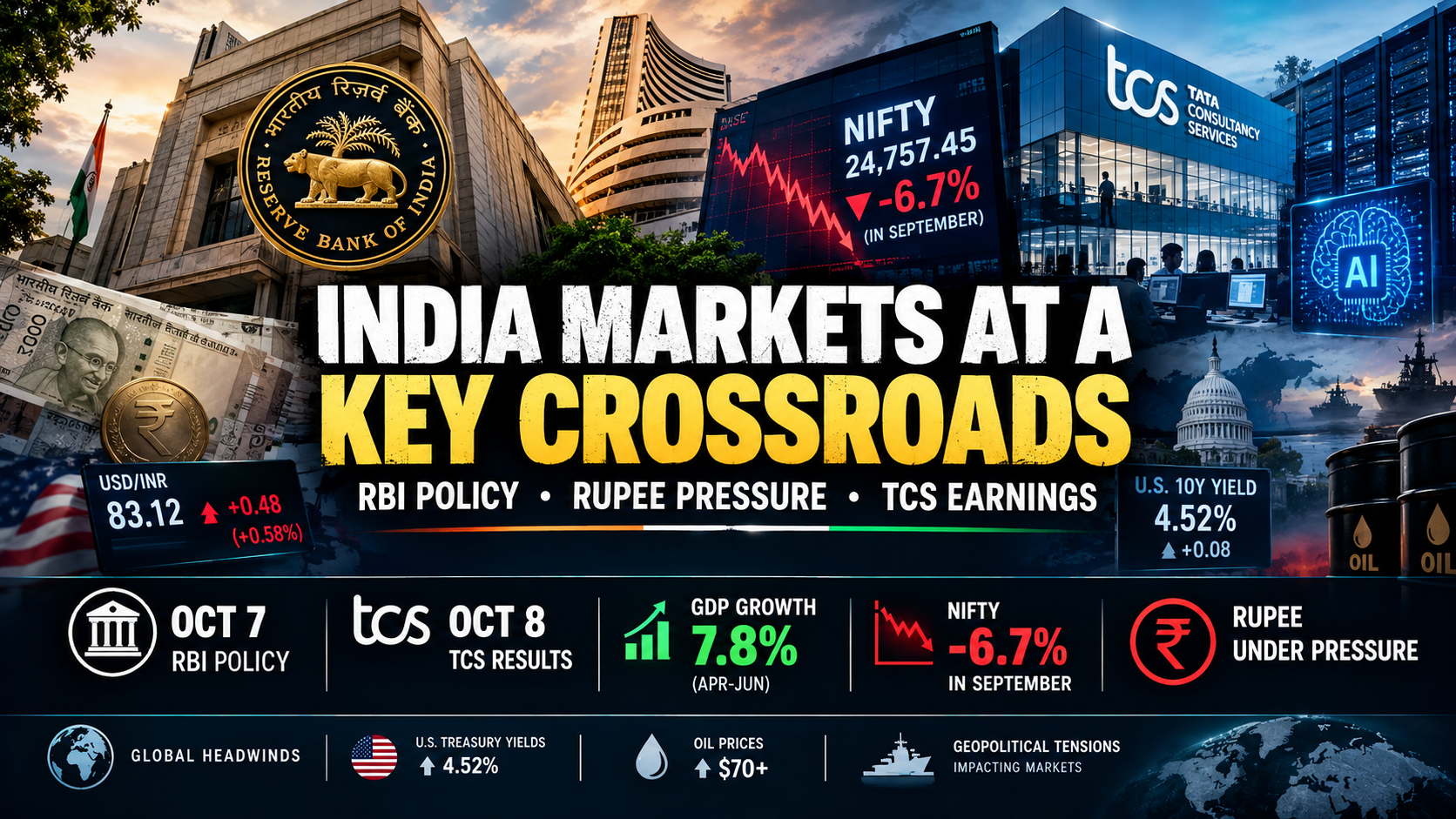
India: RBI policy, rupee and IT earnings
India’s markets face a crucial week as the RBI policy decision and TCS earnings approach, while rupee weakness and global pressures weigh on the Nifty.
Business
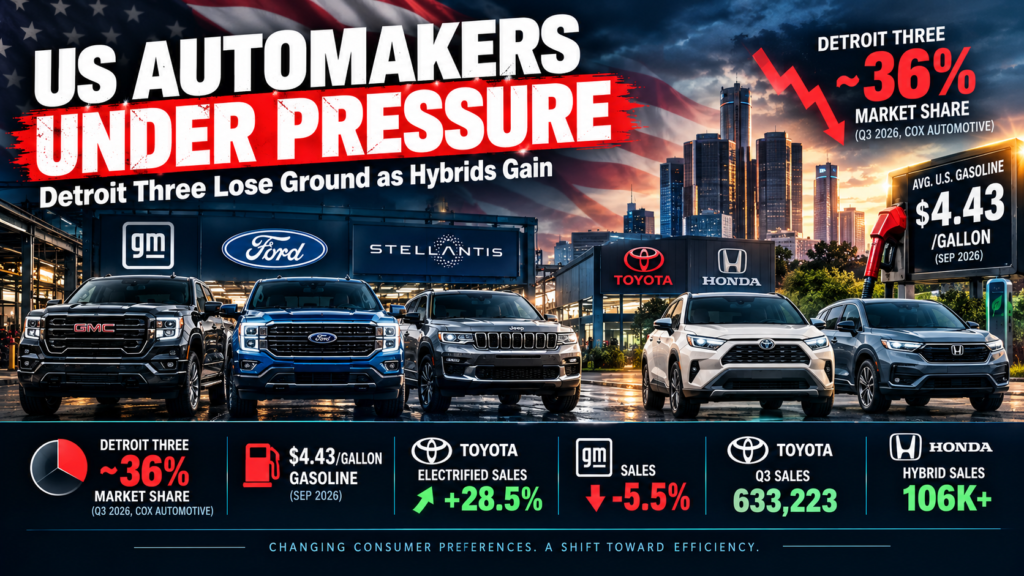
Pressure on US automakers. Reuters reports that GM, Ford and Stellantis could see their combined US market share dip to 36% for the quarter
GM, Ford and Stellantis could see their combined U.S. market share fall to around 36%, highlighting growing pressure on Detroit’s biggest automakers.

Detroit Three Slip to Record-Low US Market Share as Gas Prices Drive Buyers to Hybrids
GM, Ford and Stellantis are heading for their weakest US showing on record. Cox Automotive estimates their combined third-quarter market share at around 36%, an all-time low, while hybrid-heavy Asian brands including Toyota and Honda are expected to account for more than half of new vehicle sales.
The driver is fuel costs. The Iran war has pushed US gasoline to a national average of $4.43 a gallon in September, according to AAA, up from $3.20 a year earlier, and buyers are turning to hybrids and more efficient models.
Toyota is the clearest winner. Its electrified sales climbed 28.5% to 363,367 units, or 57.4% of its US sales, and its Corolla hybrid jumped nearly 36%. GM kept the top US sales spot, but its lead over Toyota shrank to 37,751 vehicles, and Cox has said Toyota could overtake GM in the coming years if the trend continues. GM’s quarterly sales fell 5.5% to 670,974 units. Honda posted a record hybrid quarter of more than 106,000 units, with sales up 9.3%. Stellantis sales were roughly flat at 324,277.
Ford is under particular pressure. Cox expects its sales to fall 8.8% through the first three quarters of the year, with its market share dropping nearly a full point to 12.5%. Cox also forecast that Hyundai Motor Group would outsell Ford for the first time, 511,421 vehicles to 504,172, though Ford argues that Hyundai and Kia are separate companies and that it outsold the two combined year to date.
Overall US sales for the quarter are estimated at about 4.1 million, down about 1% from a year earlier. The average new-vehicle transaction price rose 1.9% to $50,089 in August.
What to watch: Ford’s reported third-quarter sales, gasoline prices, and whether Detroit’s automakers shift more of their production toward hybrids.
Business
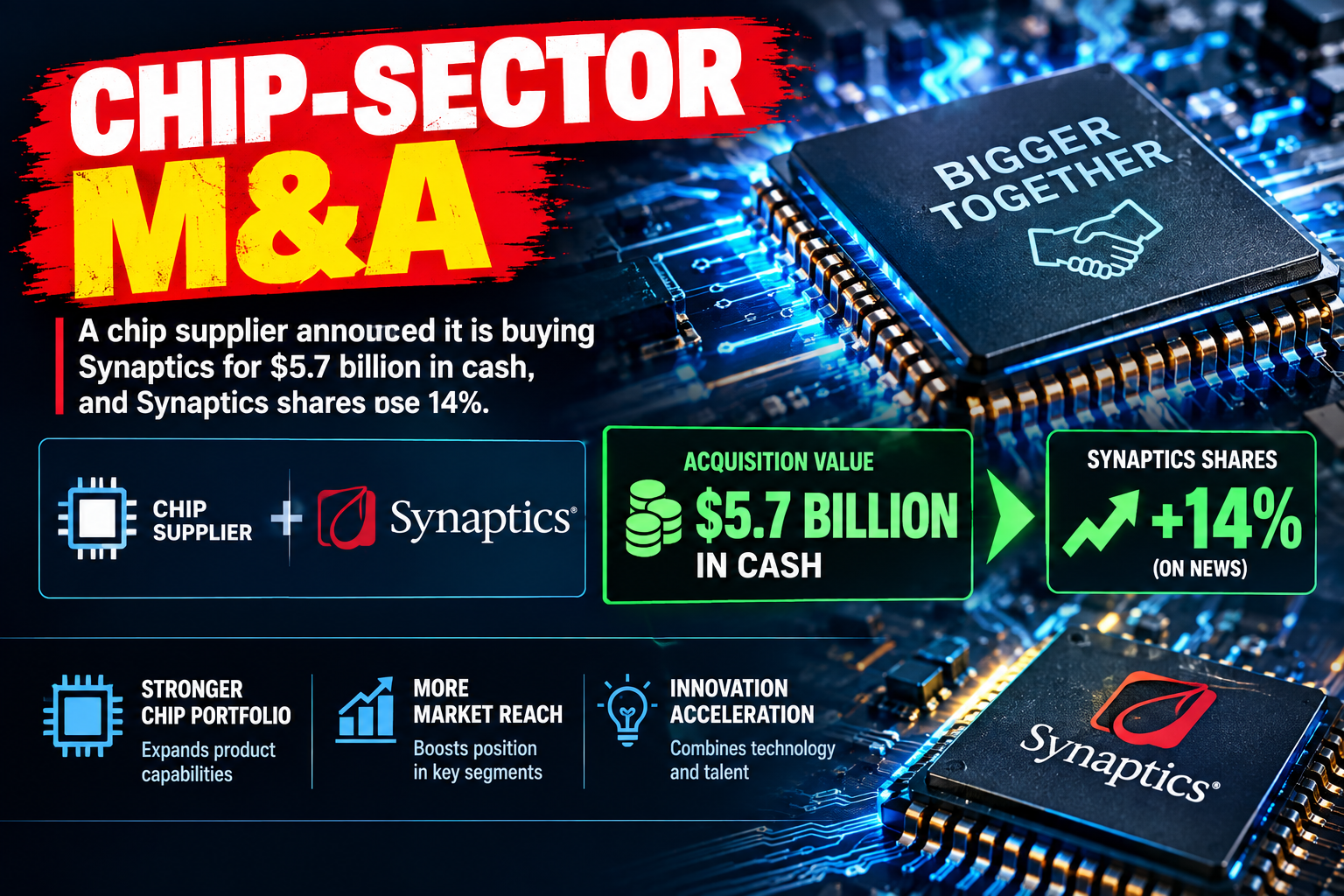
Chip-sector M&A. A chip supplier announced it is buying Synaptics for $5.7 billion in cash
Synaptics shares jumped 14% after a chip supplier announced a $5.7 billion all-cash deal to acquire the company.
onsemi Switches to $5.7 Billion All-Cash Deal for Synaptics After Rival Bid Surfaces
Shares of Synaptics jumped about 14% after chipmaker onsemi (ON Semiconductor) agreed to buy it in an all-cash deal valued at about $5.7 billion. The revised agreement, announced late Thursday, October 1, pays $123 per share in cash and replaces the all-stock deal the companies signed on June 25, which was valued at about $7 billion.
The change followed competing interest. A filing shows Synaptics had received an unsolicited, non-binding proposal from another strategic party, which likely drove the renegotiation. Synaptics’ board unanimously concluded that the amended deal remains in shareholders’ interests.
Shares of Synaptics opened more than 14% higher on Friday, moving close to the cash offer. The stock had closed at $106.15 the previous day. onsemi shares rose about 6% in premarket trading from a prior close of $80.08, with investors welcoming that the cash structure avoids issuing new shares that would have diluted existing holders.

Under the original agreement, Synaptics holders were to receive 1.350 onsemi shares for each share they own. The new deal will be funded with cash on hand and about $2.45 billion in committed debt financing from Morgan Stanley. onsemi expects the acquisition to add to its non-GAAP earnings per share immediately, and has identified $200 million of annual run-rate synergies.
The deal still needs approval from Synaptics shareholders and regulators, with completion expected by mid-2027. It came amid a broader rally in semiconductor stocks.


Spain’s train crash and upcoming election. Spain is dealing with its second deadly train crash this year.

Hong Kong’s Tai Po fire fallout. Leader John Lee apologized

Serbia’s media shake-up. The head of public broadcaster RTS resigned after the student list won an election.

Generation Z Is Killing Fast Fashion in India — And Building Something Far More Beautiful in Its Place

AR Rahman reacts to “anti-national” row over Imtiaz Ali’s Main Vaapas Aaunga

According to Dior Couture, this taboo fashion accessory is back

-

 Entertainment14 hours ago
2026 is a big year at the box office
-

 Entertainment15 hours ago
Ramayana Part 1 arrives this week.
-

 Entertainment15 hours ago
Rajinikanth’s Jailer 2 enters the top 20.
-

 Entertainment15 hours ago
Bigg Boss 20 drama. Manoj Tiwari defended his daughter
-

 Entertainment14 hours ago
Other Diwali releases. Nayanthara’s Mookuthi Amman .