
Politics
Cracks in the War Cabinet: Republicans Defy Trump on Iran as Beijing Summit Ends Without a Breakthrough

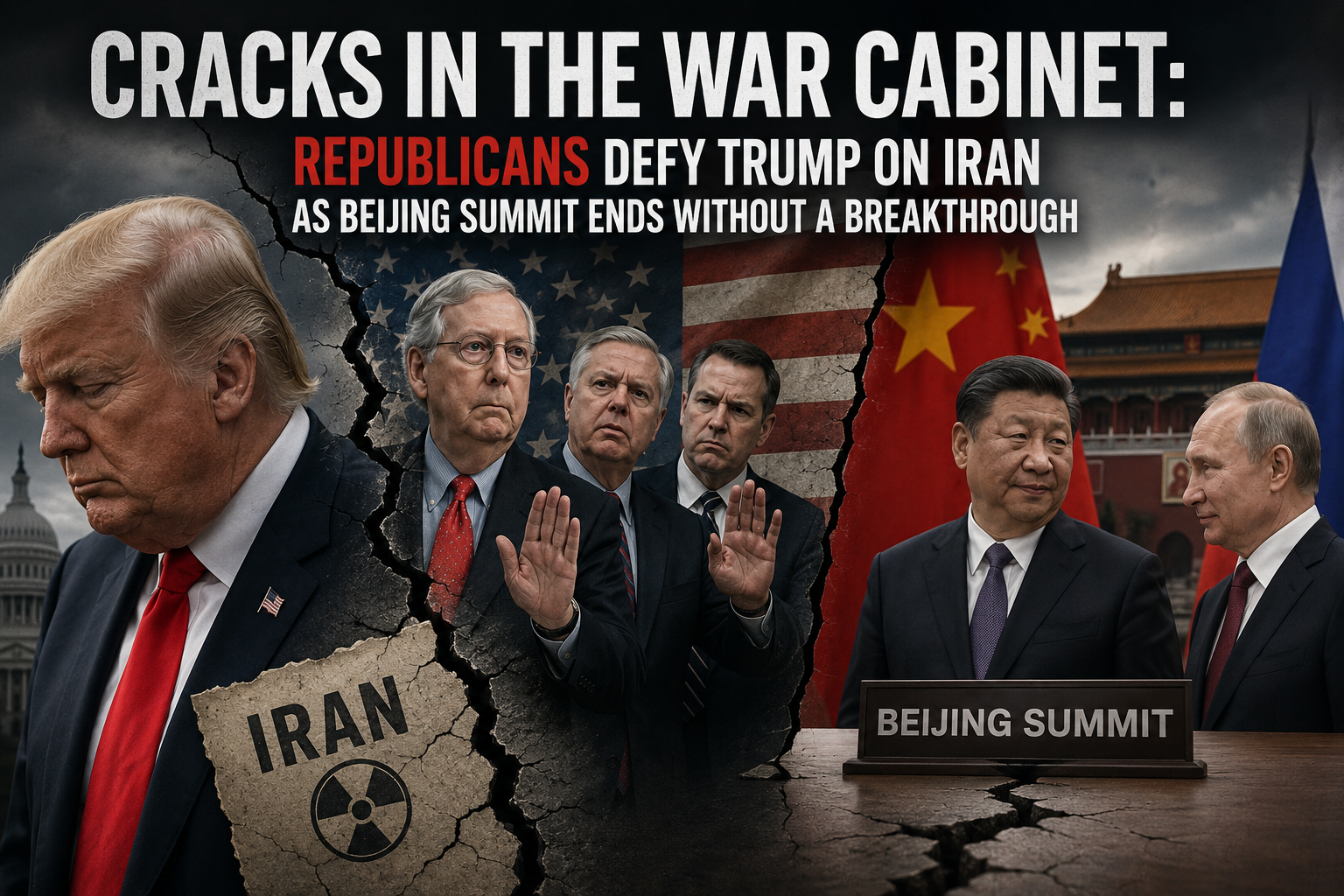
Two of the biggest stories in global politics collided this week — a rare Republican revolt against President Trump over his Iran war powers, and a landmark US–China summit in Beijing that raised more questions than it answered. Together, they mark what may be the most consequential stretch of Trump’s second term.
The Senate Revolt: 50–49, the Closest Vote Yet
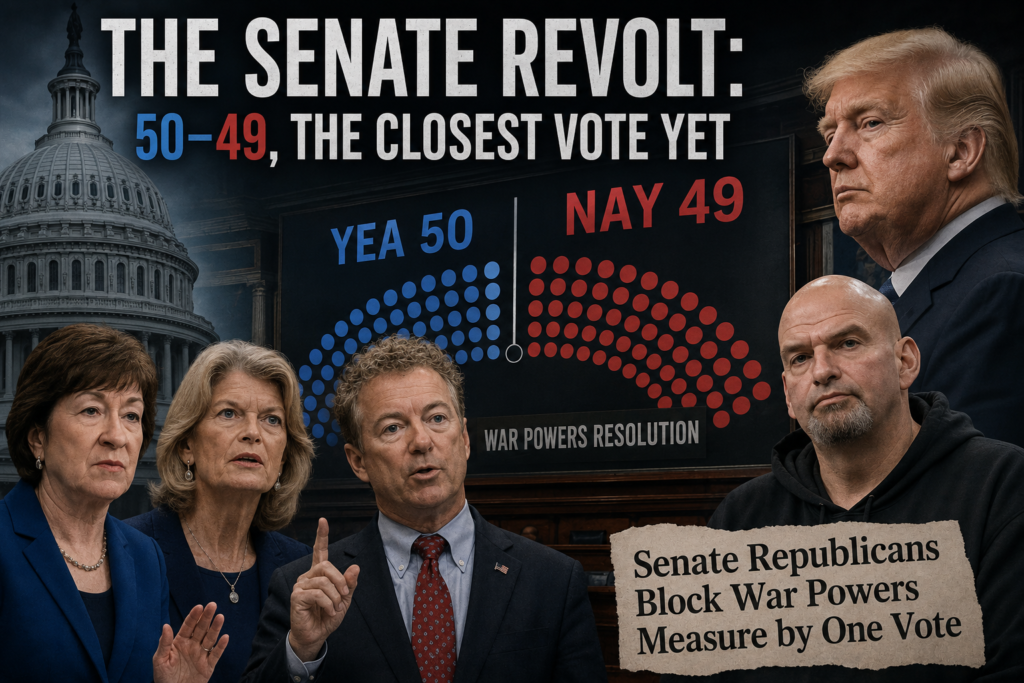
Senate Republicans narrowly blocked the strongest congressional effort yet to force an end to the war with Iran, as three Republican senators broke with their party over President Trump’s handling of the conflict. The measure, brought under the 1973 War Powers Resolution, failed by a single vote — 50 to 49. It was the seventh attempt in the Senate to pass such a measure since the war began in late February, and the first time Senator Lisa Murkowski of Alaska voted for it.
Murkowski was joined by Republicans Susan Collins of Maine and Rand Paul of Kentucky in backing the resolution. Collins first broke with Republican leadership on the issue last month, shortly before the expiration of a 60-day legal window that some experts argue required the administration to seek congressional authorization for continued military action.
Democratic Senator John Fetterman — a pro-Israel hawk — sided with the Republican majority, single-handedly helping Trump’s party block the bill.
How the war started. U.S. military action against Iran began on February 28, when the U.S. and Israel launched coordinated strikes on Iranian missile sites and IRGC facilities after Iranian attacks on U.S. positions in Iraq and Syria. The strikes killed Iran’s longtime Supreme Leader, Ayatollah Ali Khamenei, triggering a regional war that has since spread into Lebanon and several Gulf states.
The legal battle over war powers. The Trump administration has argued that the legal deadline no longer applies because a ceasefire with Iran halted hostilities before the 60-day period elapsed. In a May 1 letter to Congress, Trump said there had been “no exchange of fire” since April 7 and declared the hostilities terminated. But Democrats — and now a growing number of Republicans — have rejected that interpretation.
The White House argues the War Powers Act is unconstitutional. Secretary of State Marco Rubio told reporters it is “unconstitutional, 100 percent,” claiming the same position has been held by “every single president” since the law passed in 1973. Defense Secretary Pete Hegseth told senators that if Trump decided to restart combat operations, the administration believed it already had “all the authorities necessary to do so.”
A Reuters/Ipsos poll released this week found that two-thirds of U.S. voters do not think Trump has clearly explained why the country went to war with Iran. Despite the ceasefire that came into effect last month, the Iranian blockade of the Strait of Hormuz continues, sending oil prices soaring.
The Beijing Summit: Friendly Words, Few Breakthroughs
Against this backdrop, President Trump flew to China for a two-day summit with President Xi Jinping — the first visit to Beijing by a sitting U.S. president in nearly a decade.
The day began with Trump and Xi shaking hands outside Beijing’s Great Hall of the People. Inside the meeting room, the two leaders offered positive words on the U.S.-China relationship before talks began. The closed-door session lasted roughly two hours and 15 minutes. The White House characterized the meeting as “good.” At a state banquet, Trump said he was inviting Xi and his wife for a reciprocal visit to the White House on September 24.
Taiwan: the sharpest warning. Xi warned Trump that the U.S. and China “will have clashes and even conflicts” if the long-standing issue of Taiwan’s independence is mishandled, calling Taiwan “the most important issue” in the bilateral relationship. “Handle it well, the relationship holds; handle it badly, the two countries risk collision or conflict,” Xi said.
Iran: agreement in principle, disagreement on action. Trump said he and Xi discussed Iran and agreed Tehran should not have a nuclear weapon. Trump also told Fox News that Xi offered to help resolve the conflict and said he would not give Iran any military equipment. However, Secretary of State Rubio told NBC News in a separate interview that the U.S. did not actually ask for China’s help. Both sides agreed the Strait of Hormuz must remain open. China’s foreign ministry, meanwhile, said the Iran war “should never have happened.”
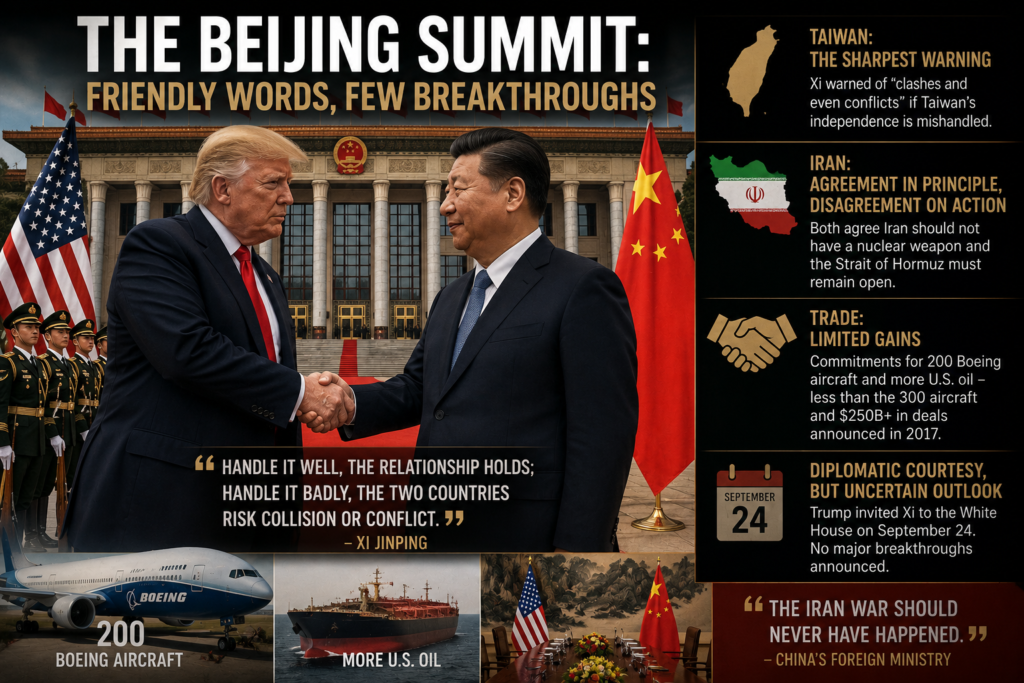
Trade: limited gains. Trump said he had made many business deals, including commitments from China to purchase 200 Boeing aircraft and more U.S. oil. But when Trump visited in 2017, China agreed to buy 300 Boeing airplanes and announced deals totaling more than $250 billion — a comparison that underlines the deterioration in the economic relationship between the two countries over the past decade.
What It All Means
Trump’s tumbling approval ratings are already raising the odds that the 2026 midterm elections could see Democrats recapture the House of Representatives, and possibly the Senate. The president’s steady decline in popularity has increased the chances of a power shift that would fundamentally alter his ability to govern through his final two years.
The Iran war, the Beijing summit, and the growing Republican unease are no longer separate stories — they are one. The question now is whether Trump can hold his coalition together long enough to shape what comes next.









Politics
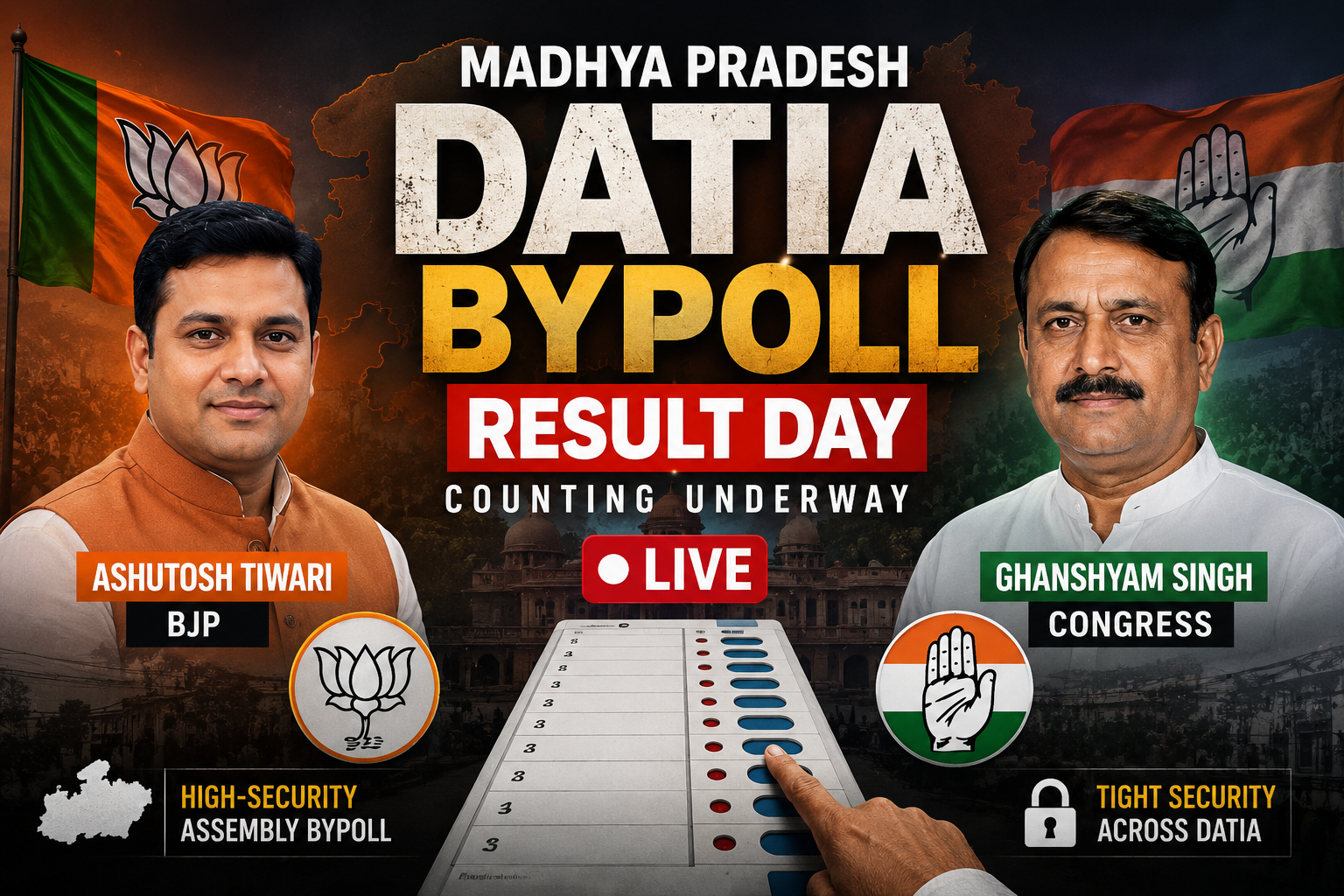
Madhya Pradesh Datia Bypoll — Result Day
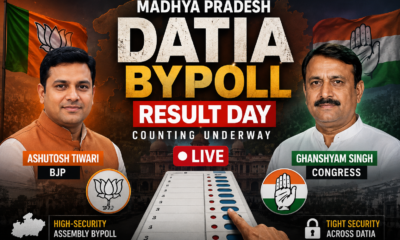
The Datia Assembly bypoll counting is underway under tight security. BJP’s Ashutosh Tiwari and Congress’s Ghanshyam Singh are locked in a crucial contest, with live trends expected to shape Madhya Pradesh’s political landscape.
Why This Seat Fell Vacant
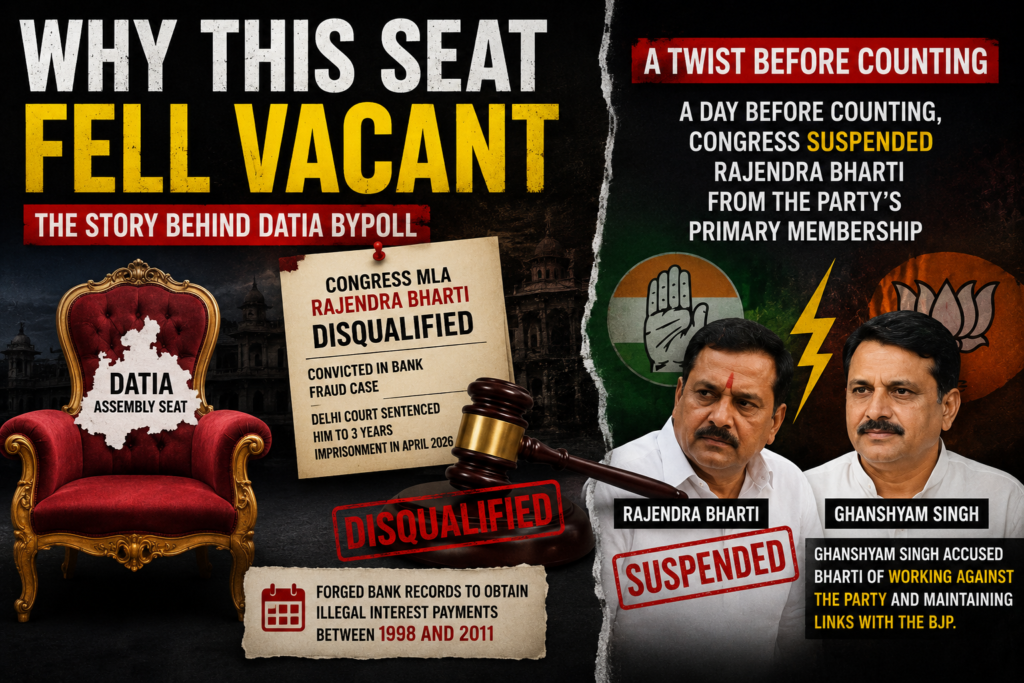
The election was necessitated after Congress MLA Rajendra Bharti was disqualified following his conviction in a bank fraud case. A Delhi court sentenced Bharti in April 2026 to three years’ imprisonment for forging bank records to obtain illegal interest payments between 1998 and 2011, though he was granted bail. In an added twist, a day before counting, Congress suspended Bharti from the party’s primary membership after Ghanshyam Singh accused him of working against the party and maintaining links with the BJP.
The Candidates
The main contest is between BJP candidate Ashutosh Tiwari and Congress nominee Ghanshyam Singh, with Azad Samaj Party (Kanshi Ram) leader Damodar Singh Yadav as the third major candidate in a three-cornered race. Singh is a three-time MLA who won the Datia seat on a Congress ticket in 1993 and 2003, and later won the neighboring Sewda seat in 2018. Notably, the BJP passed over former state Home Minister Narottam Mishra — who represented Datia for three consecutive terms before losing to Bharti in 2023 — in favor of first-time candidate Tiwari.

Turnout & Polling
Datia recorded 71.44% voter turnout, lower than the 80.2% turnout in the 2023 Madhya Pradesh Assembly elections. Congress alleged abuse of power and poll irregularities, charges the district administration rejected.
Why It Matters Beyond the Seat Itself
- This is the first electoral test for newly appointed BJP state president Hemant Khandelwal.
- In Madhya Pradesh’s 230-member Assembly, the BJP currently holds 164 seats.
- Political experts see the outcome as an indicator of both parties’ standing ahead of the 2028 Assembly elections, and the timing is notable — it comes amid recent student protests and the resignation of Union Education Minister Dharmendra Pradhan.

Live Counting Trends (as of early afternoon, Aug 3)
The race has been a genuine nail-biter, flipping leads repeatedly:
- After Round 3, Congress led by just 33 votes.
- By Round 4, Ghanshyam Singh had pulled ahead 17,290 to 16,457 — a lead of 833 votes — with Singh telling ANI he expected his margin to grow with each round and claiming some BJP workers were quietly backing him.
- By Round 6, Singh led 25,856 to 24,070 — about a 1,786-vote lead.
- Counting continued into Round 7 with Singh still ahead, with all 15 rounds yet to be completed.
Politics
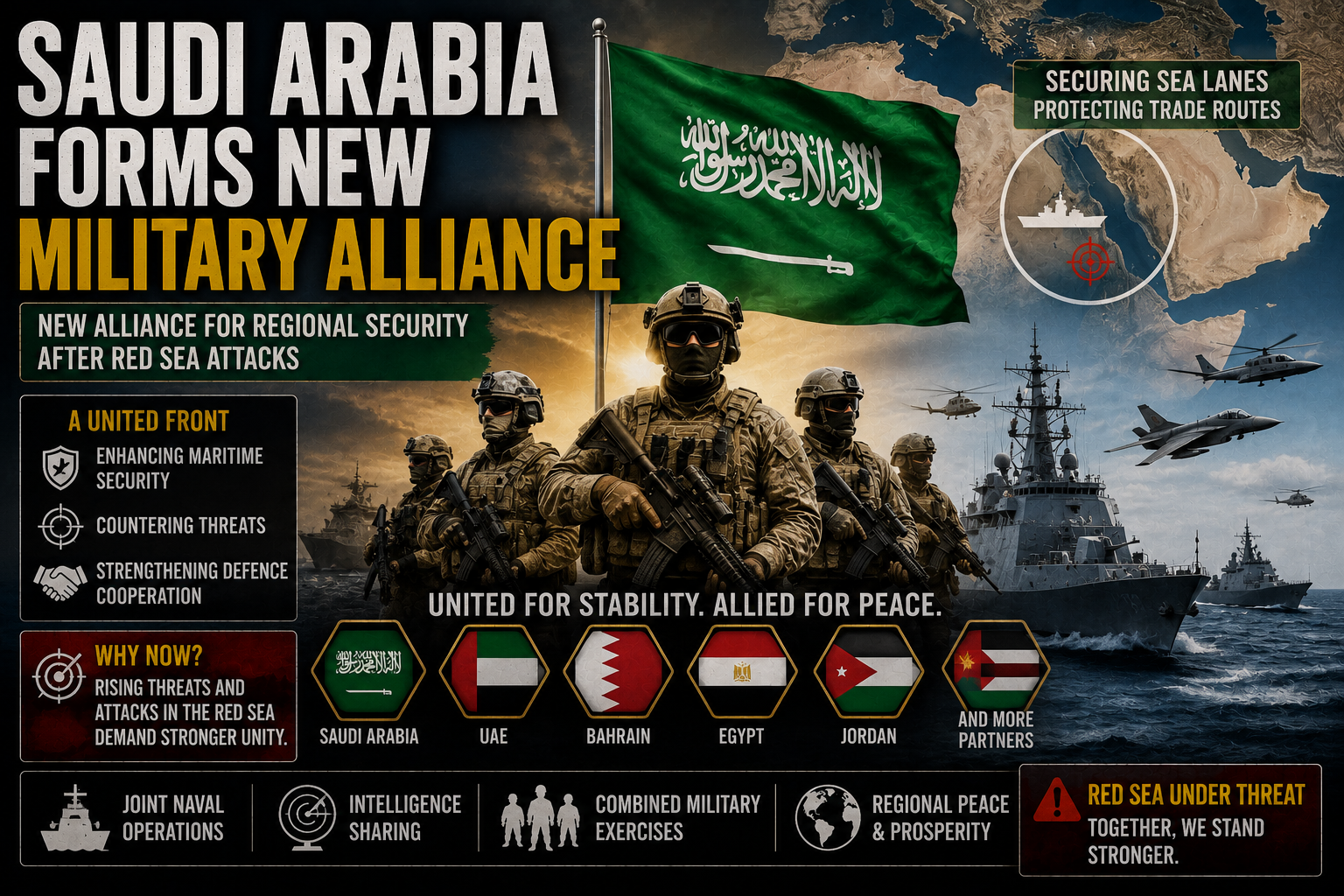
Saudi Arabia Forms New Military Alliance — Saudi Arabia has formed a new military alliance following recent Red Sea attacks.
In the wake of escalating Red Sea security threats, Saudi Arabia has unveiled a new military alliance focused on improving defense coordination, safeguarding international trade routes, and strengthening regional stability. The move comes amid growing concerns over maritime attacks and regional security challenges
Why It Was Formed
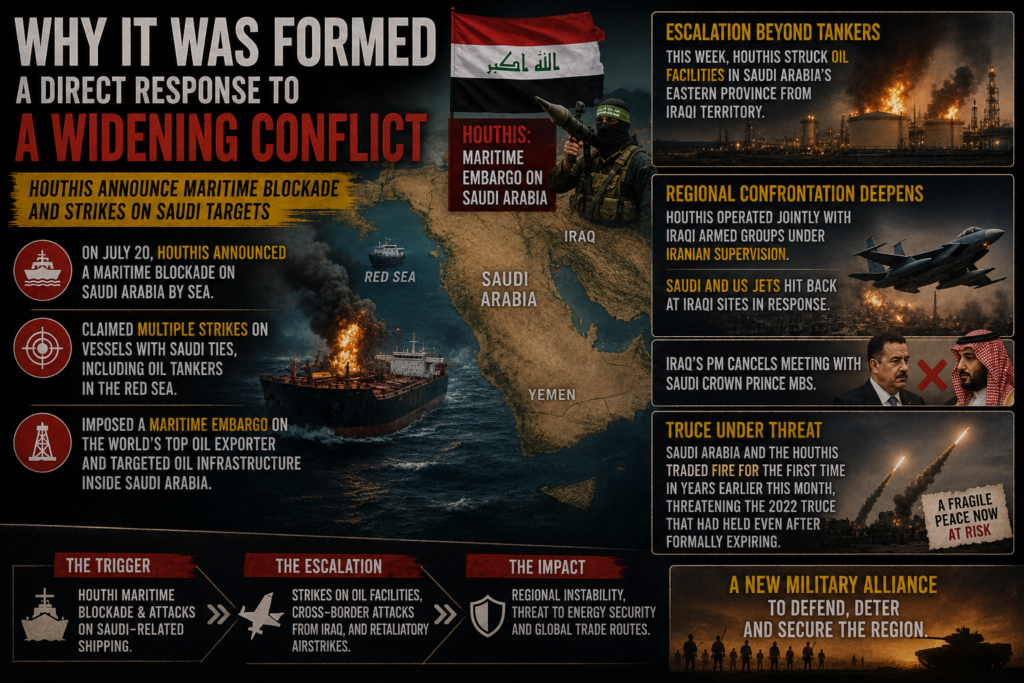
This is a direct response to a widening conflict: Yemen’s Iran-aligned Houthi militia announced on July 20 that it was blockading Saudi Arabia by sea, and subsequently claimed multiple strikes on vessels with Saudi ties. The Houthis said they were imposing a maritime embargo on the world’s top oil exporter and claimed attacks targeting Saudi oil tankers in the Red Sea, as well as oil infrastructure inside the kingdom itself.
The situation has escalated further: the Houthi campaign has widened beyond tanker attacks — this week the group struck oil facilities in Saudi Arabia’s Eastern Province from Iraqi territory, operating jointly with Iraqi armed groups under Iranian supervision. Saudi and US jets hit back at Iraqi sites in response, which prompted Iraq’s prime minister to cancel a planned meeting with Saudi Crown Prince Mohammed bin Salman.
Saudi Arabia and the Houthis had traded fire for the first time in years earlier this month, threatening a 2022 truce that had held even after formally expiring.
The Summit and the Alliance
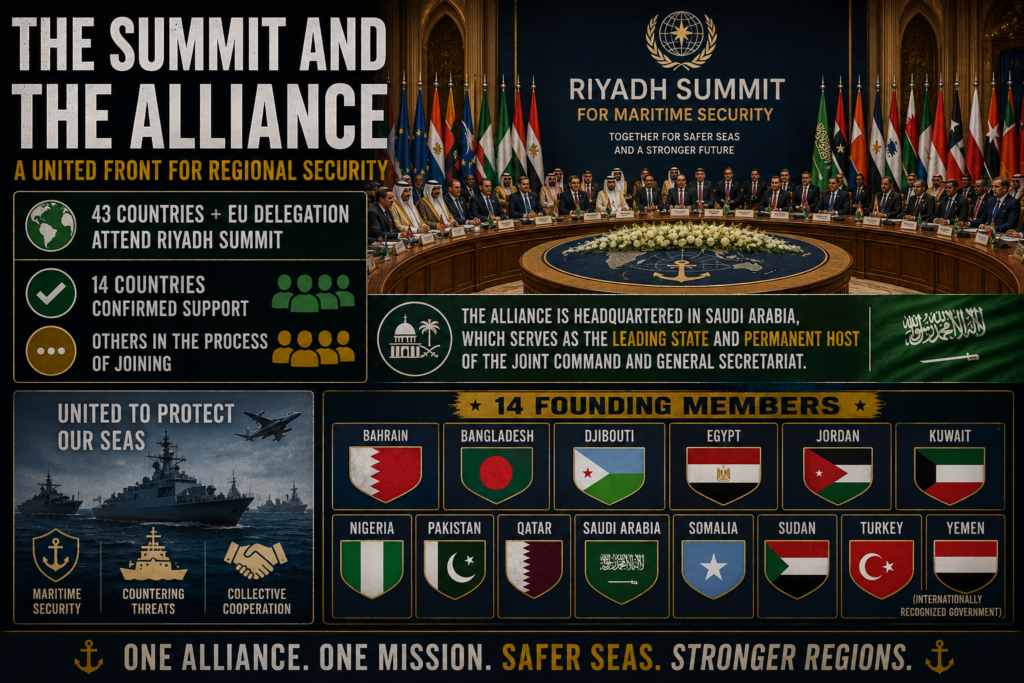
Saudi Arabia’s defense ministry said representatives of 43 countries plus an EU delegation attended the Riyadh meeting, with 14 countries confirming their support for the new coalition while others were still in the process of doing so.
The alliance is headquartered in Saudi Arabia, which serves as the leading state and permanent host of the Joint Command and General Secretariat. The 14 founding members are Bahrain, Bangladesh, Djibouti, Egypt, Jordan, Kuwait, Nigeria, Pakistan, Qatar, Saudi Arabia, Somalia, Sudan, Turkey and Yemen (the internationally recognized government).
What It’s Meant to Do
The ministry said the alliance is aimed at enhancing maritime security, safeguarding freedom of navigation, securing international trade routes and energy supply lines, and protecting shared maritime interests in the Bab al-Mandab Strait, the Red Sea, and the Gulf of Aden. It will operate through joint military operations, planning and exercises, and intelligence-sharing, and Saudi officials describe it as “purely defensive,” not targeting any state or existing alliance.
Notable Absences and Politics
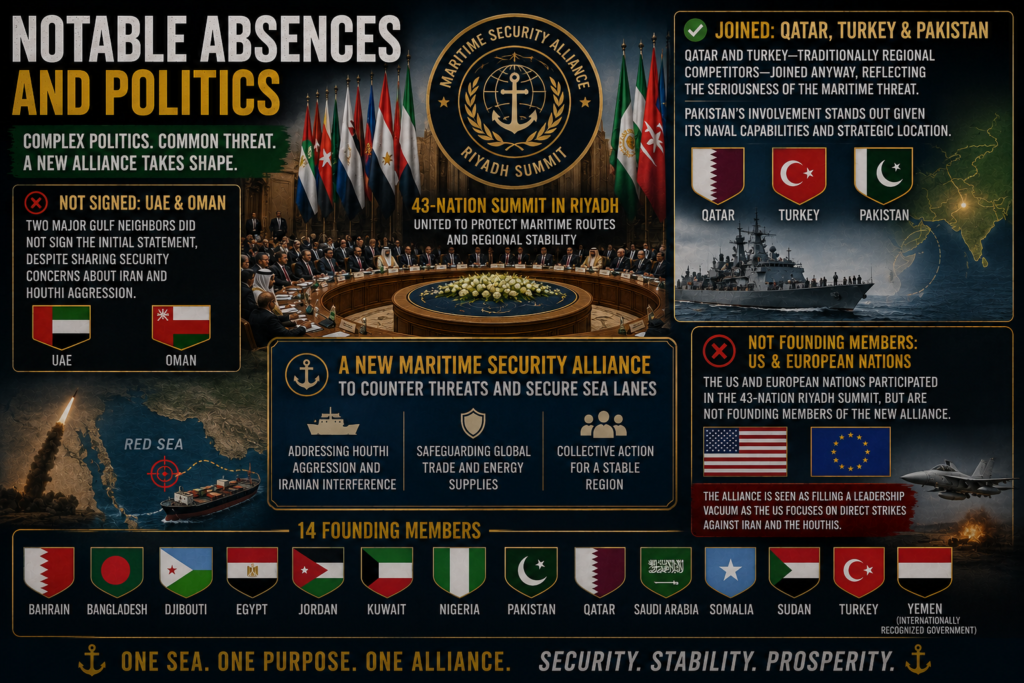
Two major Gulf neighbors — the UAE and Oman — did not sign the initial statement, despite sharing security concerns about Iran and Houthi aggression. Interestingly, Qatar and Turkey — traditionally regarded as Saudi Arabia’s regional competitors — joined anyway, reflecting how seriously they view the maritime threat, while Pakistan’s involvement stands out given its naval capabilities and strategic location.
Though the US and European nations took part in the 43-nation Riyadh summit, they are not founding members of the new alliance — this coalition is seen as filling a leadership vacuum since the US is focused on direct strikes against Iran and the Houthis.
How It Differs From Existing Missions
This isn’t the first response to Houthi Red Sea attacks — the EU-led Aspides mission and the US-led Prosperity Guardian operation were already established to protect shipping after Houthi attacks began in 2023. Questions remain about how this new Saudi-led body will distinguish itself from Aspides, which has been operating in the Red Sea since 2024.
The Bigger Picture
Semafor’s framing captures the stakes well: Saudi Arabia is being pulled into a war it spent months trying to avoid, as its own territory and oil infrastructure now come under direct attack rather than just its shipping interests — making this alliance as much a matter of national self-defense as regional diplomacy.
Politics
FIFA World Cup Private Equity Controversy — A major sports-politics crossover:
FIFA is facing growing pressure after a proposal to involve a private equity firm in World Cup commercial rights sparked opposition across the football world. European football associations have warned of a boycott if the deal moves forward, while a senior FIFA adviser has stepped down, raising fresh questions about governance and the future of the tournament.

The Original Plan
Infantino proposed spinning off FIFA’s commercial businesses — including the men’s and women’s World Cups and Club World Cups — into a $20 billion subsidiary, with 20% owned by private investors. The “anchor investor” was a New York-based investment firm created by Joshua Kushner, the younger brother of Jared Kushner (Trump’s son-in-law). The plan drew growing pushback from the moment media reports revealed it on Tuesday.
The Revolt Builds
Opposition escalated fast across multiple fronts:
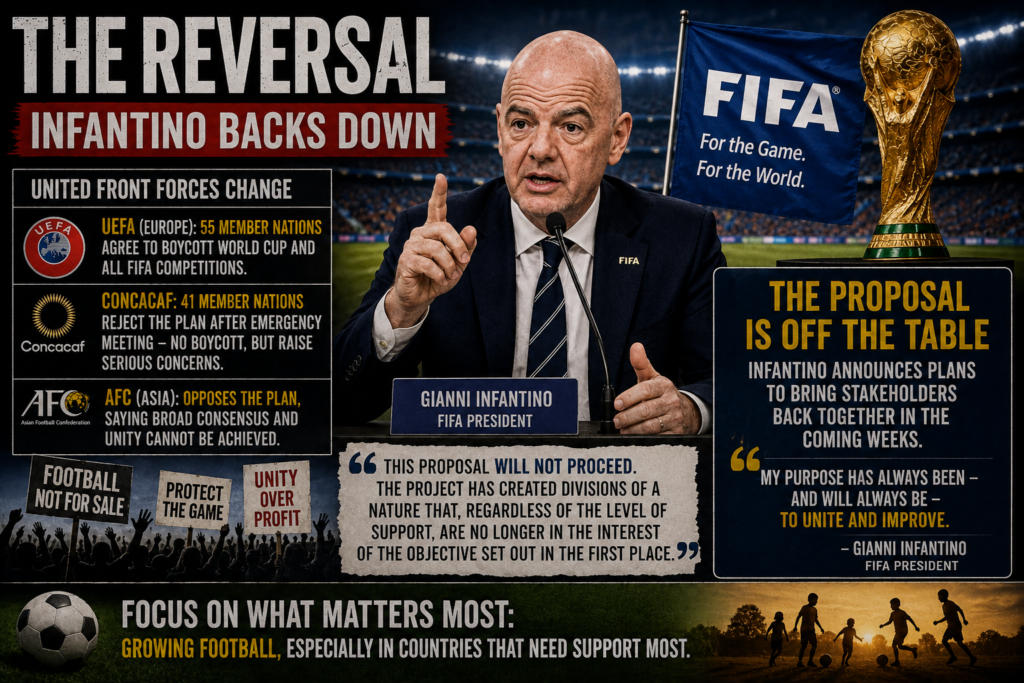
- UEFA (Europe): UEFA’s 55 member nations agreed to boycott the World Cup and all other FIFA competitions over the plan, declaring: “Some things are simply too important to sell. The FIFA World Cup belongs to football. It always will. And so long as Europe has a voice, it will never be for sale.”
- CONCACAF (North/Central America & Caribbean): The 41-member body rejected the plan after an emergency meeting, though it stopped short of a boycott — citing concerns about lack of due process, an artificially short deadline, and no review by FIFA’s own governance bodies.
- AFC (Asia): Asia’s soccer body also joined in opposing the plan, saying it couldn’t realistically achieve the “broad consensus and unity” needed to move forward.

Internal Collapse
The most damaging blow came from inside FIFA itself:
- Carlos Cordeiro — a former Goldman Sachs banker and Infantino’s senior adviser who represented FIFA on the White House World Cup Task Force — resigned, revealing he hadn’t even been consulted on the plan and calling the Kushner-backed deal “a bad deal for football.” He said, “I cannot stand by while FIFA considers selling a stake in the World Cup.”
- FIFA’s chief operating officer, Kevin Lamour, also came out harshly against the plan, saying FIFA staff had been blindsided by it.
The Reversal
Facing this united front, Infantino backed down. In a statement Friday, he said “this proposal will not proceed,” explaining that “the project has created divisions of a nature that, regardless of the level of support, are no longer in the interest of the objective set out in the first place.” He added that his purpose “has always been — and will always be — to unite and improve.” He said he intends to bring interested parties back together in coming weeks, with a focus on growing football, particularly in countries that need support most.
Why It Matters Going Forward
- The next FIFA event is the Women’s Under-20 World Cup, starting September 5 in Poland — which UEFA had said it would boycott over this issue, so the climbdown likely averts that.
- Infantino was reelected unopposed in 2019 and 2023 and can serve one more four-year term under FIFA statutes; the deadline for the next presidential contest is November 18, four months ahead of the vote in Rabat, Morocco. This episode — plus the Cordeiro/Lamour fallout — could weaken his standing heading into that race.
- Infantino’s close relationship with Trump has drawn scrutiny throughout this summer’s World Cup, and the Kushner-family connection kept US political dynamics tangled up in what’s normally a purely sporting governance story.


Apple’s foldable “iPhone Ultra” and Chrome’s Manifest V2 extension cutoff

Amazon expanding drone delivery to ~500 US cities

Google’s $12.2 billion stake deal with Marvell

Generation Z Is Killing Fast Fashion in India — And Building Something Far More Beautiful in Its Place

AR Rahman reacts to “anti-national” row over Imtiaz Ali’s Main Vaapas Aaunga