
Entertainment
A24 Partners With Google DeepMind in $75 Million AI Deal — What It Means for the Future of Filmmaking
A24 has partnered with Google to explore AI-powered tools for filmmaking and creative storytelling. The collaboration aims to improve production workflows while fostering innovation across the entertainment industry.


Indie powerhouse A24 has struck a landmark deal with Google’s AI research division, DeepMind — a move that marks the tech giant’s first-ever financial stake in a Hollywood film studio and signals a significant new chapter in the entertainment industry’s uneasy relationship with artificial intelligence.
The Deal: $75 Million, Multi-Year, Non-Exclusive
Google DeepMind is investing approximately $75 million in A24 as part of a multi-year, non-exclusive research partnership focused on developing AI-powered tools for filmmaking and distribution. The investment is reportedly in line with what venture firm Thrive Capital put into A24 during its last funding round.
Crucially, the deal is structured as a research collaboration rather than a content acquisition. DeepMind researchers will work directly alongside A24’s filmmaking teams, embedding inside active productions to build and refine AI tools based on real-world creative feedback. In return, A24 gains access to DeepMind’s research infrastructure, including Veo, Google’s video-generation model.

What Google Does — and Doesn’t — Get Access To
The partnership comes with clearly defined boundaries that both companies have been quick to emphasize:
- No access to A24’s content library. Google will not be able to use A24’s existing films as training data for its AI models.
- A24 retains full creative control. The studio says the partnership won’t dictate how filmmakers use the tools.
- The first tool in development is an AI storyboard generator — not a script generator, performance tool, or finished-scene creator.
A24 partner Scott Belsky, who heads the studio’s 20-person technology division, A24 Labs, told the Wall Street Journal that the new tools “won’t look anything like the prompted generation type of AI that people feel uncomfortable with.” Belsky argued that most AI companies have pitched filmmakers on speed and cost reduction, while A24’s approach is designed to preserve creative risk-taking instead.
Google DeepMind CEO Demis Hassabis echoed that framing in a statement, saying the company believes “the best way to develop tools that empower artists is to work directly with them,” adding that collaborating with filmmakers from the outset would help build AI features that support “authentic, meaningful storytelling.”

Why This Deal Is Different From Other Hollywood-AI Pacts
The A24-DeepMind partnership arrives amid a turbulent period for Hollywood’s relationship with artificial intelligence, one defined by both collaboration and litigation:
- Disney’s brief AI alliance with OpenAI to license its character library came even as the company simultaneously sued AI firms like Midjourney and MiniMax for copyright infringement.
- Lionsgate’s deal with Runway AI gave the AI company access to its film library to train a generative model — a key point of contrast with A24’s deal, which explicitly withholds that access.
- Netflix’s $600 million acquisition of InterPositive brought AI tools directly into its in-house production workflow.
DeepMind has also previously collaborated with individual filmmakers, including Darren Aronofsky’s production company Primordial Soup, which has used Veo for AI-assisted short films. However, the A24 partnership marks DeepMind‘s first deal with a full-fledged studio, giving it sustained, embedded access across multiple active productions rather than a single one-off project.
Fan and Industry Reaction Has Been Sharply Divided
The announcement triggered immediate backlash from large parts of A24’s fanbase, who view the studio’s identity as built on resisting exactly the kind of corporate, tech-driven compromises this deal appears to represent. Several outlets reported that online communities dedicated to the studio reacted with dismay within hours of the news breaking.
The timing has added to the irony for critics: the deal follows shortly after the massive theatrical success of Backrooms, A24’s biggest box-office hit to date, directed by Kane Parsons — a filmmaker who has been notably vocal about his skepticism of generative AI, reportedly describing it as a source of “creative rot” in past interviews.
Industry observers have also pointed to a broader pattern forming around DeepMind’s strategy: embedding researchers inside creative or interactive environments, gathering real-world feedback, and feeding improvements back into Google’s wider AI ecosystem. The company reportedly took a similar approach with a minority stake in a major multiplayer gaming studio earlier this year.

A24’s Bigger Picture
The DeepMind partnership comes at a moment of rapid expansion for A24. The studio’s revenue has reportedly more than doubled over the past two years as it grows beyond film into unscripted television, theater, and international production — including a newly established office in the United Kingdom. A24 is also currently financing its most expensive project to date: a reported $175 million adaptation of the video game Elden Ring, to be directed by Alex Garland.
Whether the DeepMind partnership ultimately strengthens or undermines A24’s reputation as Hollywood’s premier filmmaker-first studio remains an open question — one that is likely to keep generating headlines as the first AI-assisted tools begin rolling out to productions..



Entertainment
Hong Kong’s Tai Po fire fallout. Leader John Lee apologized
Hong Kong’s Tai Po fire triggers political fallout as John Lee apologizes and the housing secretary resigns following findings of inadequate regulatory oversight.

Hong Kong’s Tai Po fire fallout: a detailed look (as of October 31, 2026)
What happened
- The fire: It ravaged a residential tower complex in Tai Po in November 2025, killing 168, injuring 79 and displacing thousands. It tore through seven 31-story blocks at Wang Fuk Court, which was undergoing renovation and wrapped in dust netting and scaffolding.
- The wait: Many former residents spent nearly a year waiting to see how the government would address accountability.
The independent committee’s findings (released October 29)
- Cause: The report said evidence pointed to a lit cigarette. The fire started on a flat roof between two first-floor apartments in Wang Cheong House, and there was substantial evidence that construction workers smoked on site, including on the scaffolding.
- Why it spread: Experts found that foam boards, non-fire-retardant scaffolding nets and canvases contributed.
- Regulatory failure: The committee found deficiencies in supervision by the Housing Bureau’s independent checking unit, the Buildings Department, the Fire Services Department and the Labor Department. It said deception succeeded because the regulators’ own practices enabled it.
- Misconduct: The report also noted features pointing to bid-rigging and related misconduct at Wang Fuk Court.
- Earlier warnings: The fire came after more than a year of safety complaints.

The political response
- Apology: Lee and seven other top officials bowed in apology at the start of the news conference. Lee apologised to victims and the public and promised comprehensive reforms so that similar incidents will never be allowed to happen again. The AP called it a rare apology.
- Resignation: Housing Secretary Winnie Ho resigned on Wednesday. Lee said she should bear political responsibility, although no personal wrongdoing was found. She is the first official to resign over the fire.
- More to come: A three-month investigation will determine whether government employees were derelict in their duties. All four agencies are under it.
- An expert view: John Burns of the University of Hong Kong called the apology very significant. NBC framed the episode as testing Beijing’s grip on the city.
What I couldn’t confirm
- Ho’s successor. I found no report naming one.
- Reactions from victims’ families or critics. The sources I found contained little on them.
Cautions for publishing
- Cause versus accountability. The cigarette finding is the committee’s evidence-based conclusion, and the regulatory failings are a separate finding. Keep them distinct.
- “Derelict in duties” isn’t a finding yet. The three-month investigation hasn’t reported.
- Use “committee found.” Don’t state these conclusions as your own.
Entertainment
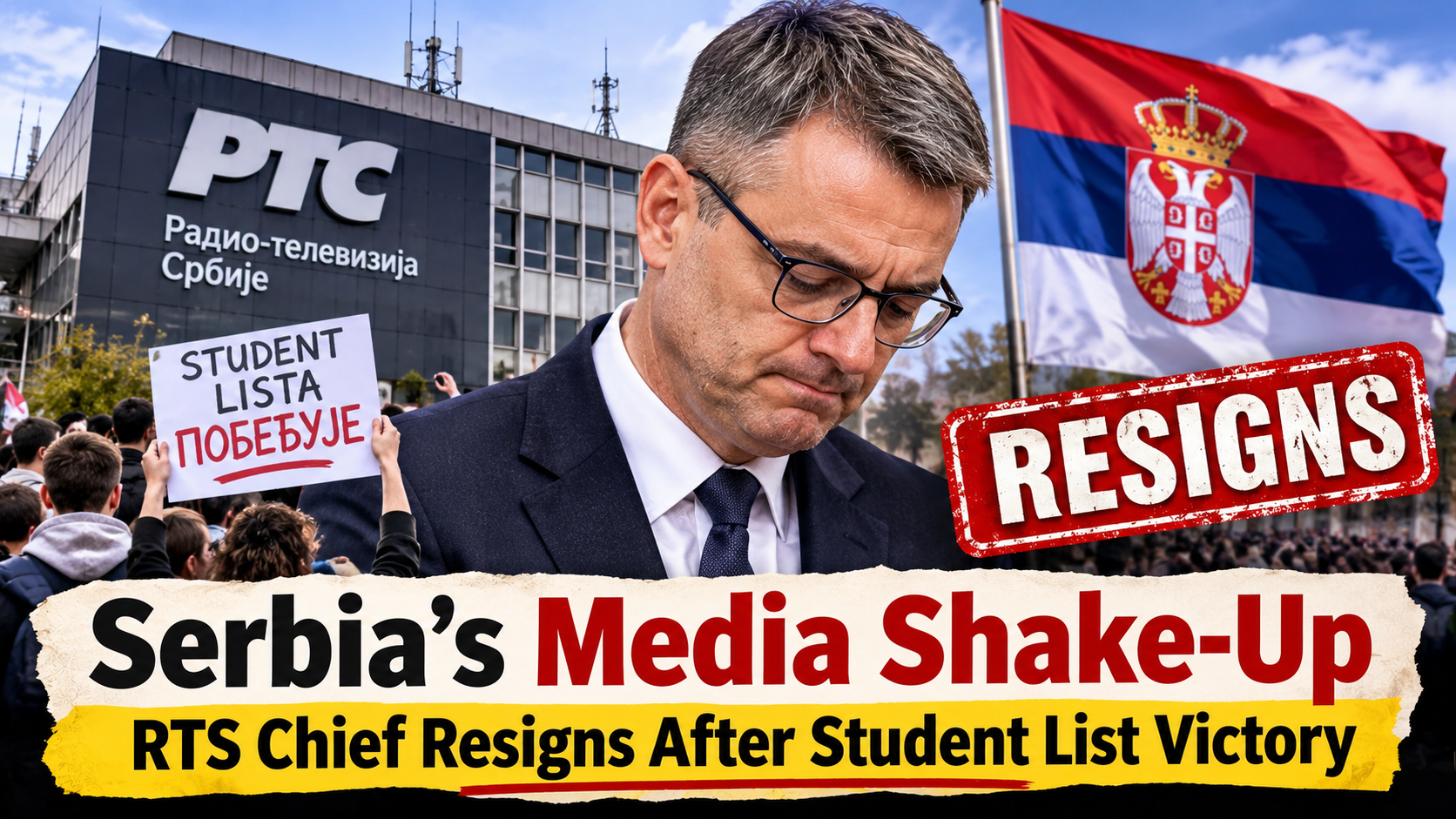
Serbia’s media shake-up. The head of public broadcaster RTS resigned after the student list won an election.
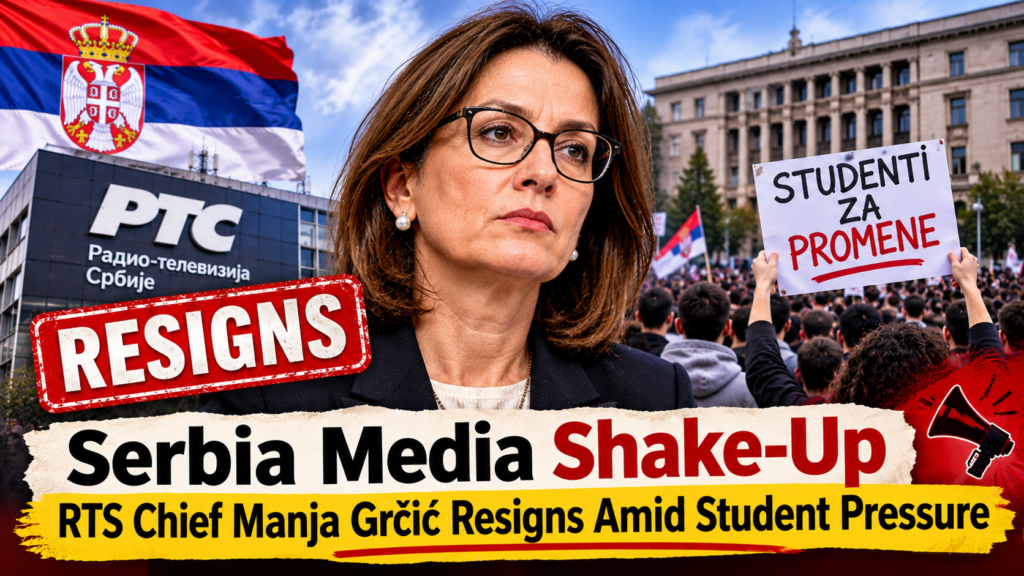
RTS Director-General Manja Grčić has resigned amid pressure from Serbia’s Student List and employee unions, bringing renewed attention to media independence and political influence in the country.
Serbia’s media shake-up: a detailed look (as of October 31, 2026)
This is a bigger story than my earlier one-line summary suggested. The RTS resignation is one consequence of a change of government.
The election
- The result: On October 25, the Student List won the snap parliamentary election, and Aleksandar Vučić conceded defeat. The electoral commission’s latest update gave the list 140 of 250 seats and Vučić’s SNS 104, though the result was not yet final and parliament could not convene. Vote-share figures vary by source, at roughly 52–53% for the winners.
- Where the movement came from: It grew out of two years of protests that began after the 2024 Novi Sad railway station canopy collapse, which killed 16 people.
- Vučić’s position: He has dominated Serbian politics as prime minister or president since 2014. He sought a return to the prime minister’s office in this election.
The RTS resignation
- What happened: Director-General Manja Grčić resigned on October 28 after the Student List and employee unions demanded the removal of the leadership. She had ruled out stepping down a day earlier.
- Her stated reason: She said she knew that some of the public saw her staying in office as “temporarily” an obstacle to change, and she asked the managing board to ensure a lawful handover.
- Her background: She became head of RTS in February 2026 on a five-year term and was the first woman to hold the post.
- Before leaving: She fired the editor-in-chief of RTS’s news program and proposed a replacement.
- The pressure: The Student List sent RTS an open letter the day before, listing removing political influence among its key priorities. On October 28, a Student List candidate appeared on RTS’s main evening news for the first time and criticised its coverage of the movement.
- The precedent: The director of regional broadcaster RTV Vojvodina resigned first, and a presenter apologised on air for years of one-sided reporting.
The wider media picture
- Ranking: Reporters Without Borders ranked Serbia 104th of 180 countries in the 2026 index, its lowest ever.
- Coverage: Election monitor Crta found the Student List was portrayed negatively more than 80% of the time it was discussed on TV.
- A warning: RSF warned that losing the independence of the outlets N1 and Nova would complete media capture at a crucial moment.
- A regional parallel: Reuters noted the move echoed Hungary’s main state TV channel, which in July, after Orbán’s defeat in April, displayed a black screen saying public media cannot lie.
What’s next
- Who runs RTS: Speculation is mounting, and no successor is named.
- More demands: On Thursday the movement called for resignations of leading public figures and investigations into alleged corruption during Vučić’s tenure.
- The government: The Student List can form a majority on its own, and a government must be formed within 90 days after parliament convenes. It didn’t name a prime minister during the campaign. Lead candidate Ilija Srđanović, a cardiologist and professor, is the subject of public speculation.
- Foreign policy: The list says it will keep Serbia’s stance against sanctions on Russia while backing Ukraine’s territorial integrity. The result could signal closer EU ties.
Cautions for publishing
- Results aren’t final, so seat counts could change.
- Attribute the framing. “Depoliticisation” is the Student List’s and the unions’ demand. Describe it as their position.
- Quote Vučić carefully. One outlet reports he blamed independent media, European governments and an “American deep state,” but I found that in only one source, so verify it before publishing.
Entertainment
The Vimal Elaichi ad row.
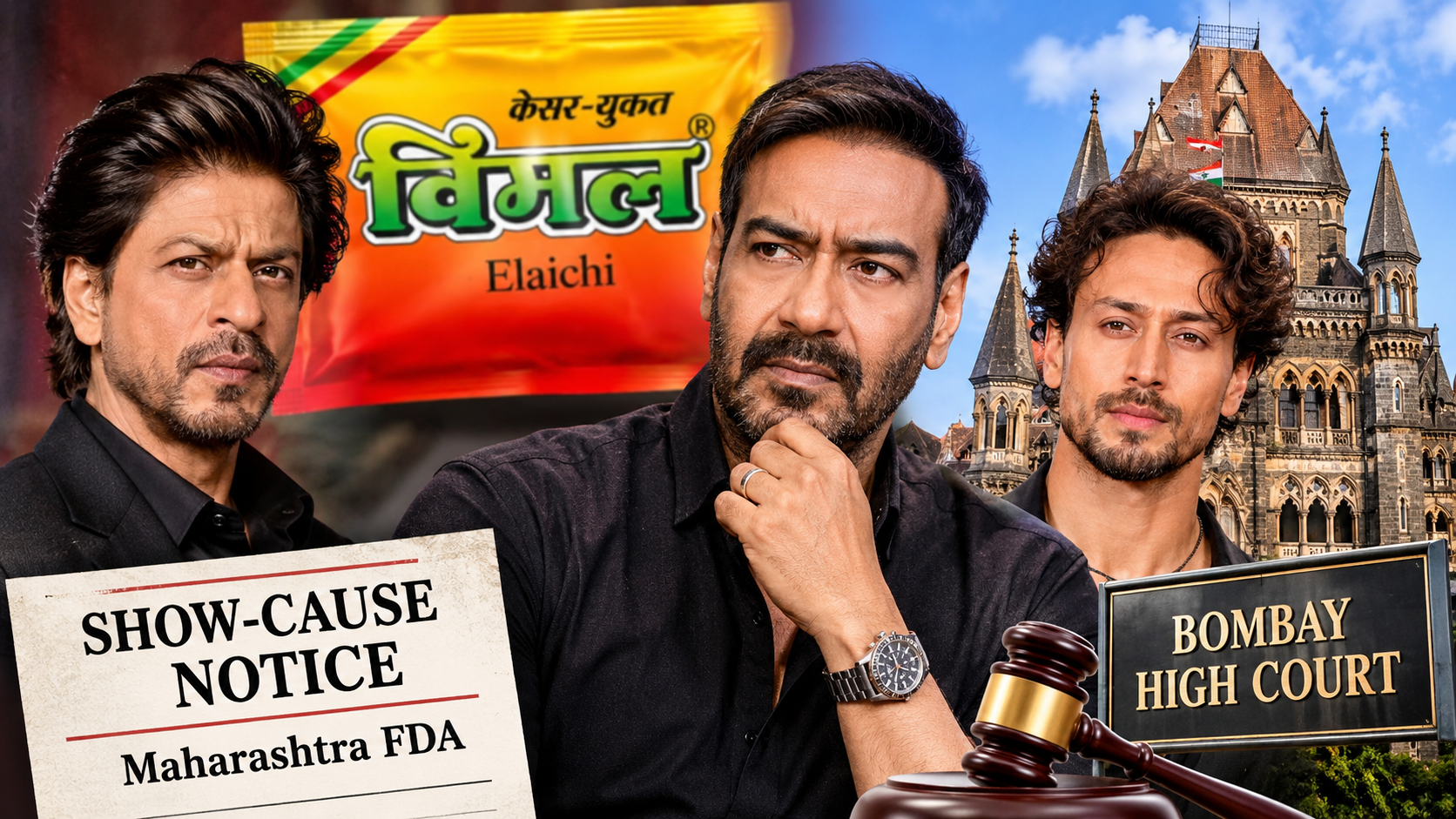
Ajay Devgn has approached the Bombay High Court challenging the Maharashtra FDA’s notice over the Vimal Elaichi advertisement controversy. The hearing is expected on November 4.
The Vimal Elaichi ad row: a detailed look (as of October 31, 2026)
What this is about
The Maharashtra FDA alleges that Vimal Elaichi (cardamom) advertisements featuring three major stars are really promoting Vimal Pan Masala, which is banned in the state. Regulators call that “surrogate advertising.” The actors have not been found guilty of anything. The case has not yet been adjudicated.
Timeline
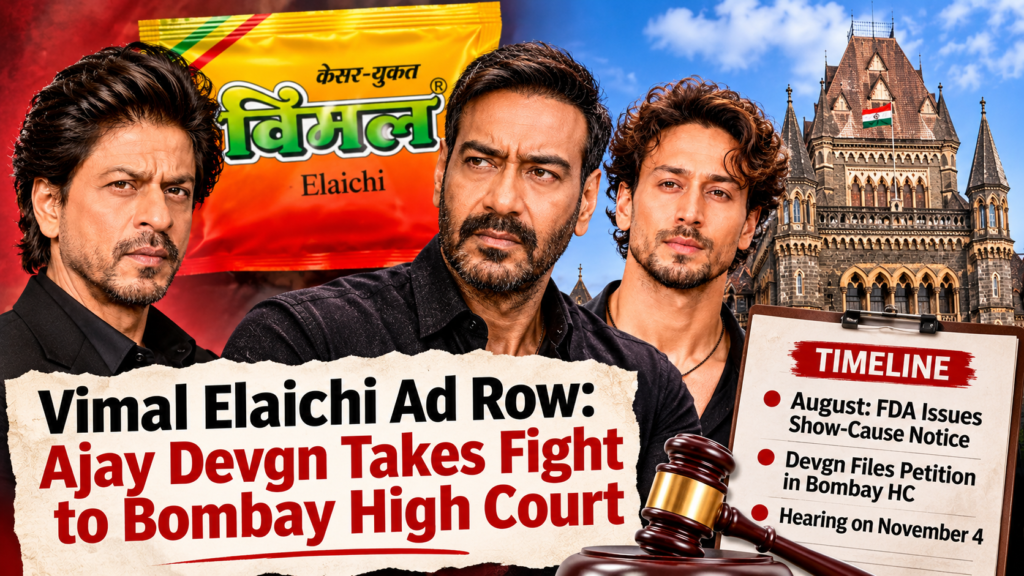
- August: The Maharashtra FDA issued a show-cause notice to Shah Rukh Khan, Ajay Devgn and Tiger Shroff, alleging that the ad prima facie amounts to indirect or surrogate promotion of prohibited pan masala. The actors had 15 days to respond. It was a nine-page notice.
- What the FDA demanded: It directed the actors to stop taking part in the campaign and to remove related promotional material from their social media accounts.
- The maker’s challenge: PB Agro, which makes Vimal Elaichi, went to the Delhi High Court in August to quash the notices. The court dismissed the plea, ruling it lacked territorial jurisdiction.
- The actors’ responses: All three responded, and two sought personal hearings, which were completed on September 28.
- Devgn goes to court: He approached the Bombay High Court, challenging the notice over his Vimal Elaichi endorsement. He has questioned why he was targeted instead of the company behind the brand. He has also questioned the legal provisions and the action against actors instead of manufacturers. The petition is expected to be heard on November 4.
- FDA closes its proceedings (today): Commissioner Tukaram Mundhe said the proceedings are closed and the designated officer proposes adjudication before the Joint Commissioner, the competent authority. He said that would happen next week.
Where it stands
- Two tracks run in parallel. The FDA’s adjudication before the Joint Commissioner is a separate matter from Devgn’s High Court petition.
- No penalty announced. As of the latest reports, no final decision or penalty had been announced.
- Media framing varies. One outlet says the FDA “finds rule violations,” but Mundhe’s statements, as reported, describe closing the proceedings and sending the cases for adjudication. Avoid stating a violation as established.
Background and reactions
- Not a new row. In an earlier controversy over the same ad, Akshay Kumar apologised after online backlash, and a Goa BJP leader urged the Prime Minister to strip the actors of their Padma Awards. Devgn defended his association then, calling it a personal choice and saying he did “elaichi.”
- Current criticism. Actor Mukesh Khanna has criticised the three stars and backed the FDA’s notices.
Cautions for publishing
- Say “alleged.” The FDA alleges surrogate advertising, and the actors dispute it.
- Check the hearing date. November 4 is “expected,” so confirm it before you publish.
- The Delhi High Court ruling was only on jurisdiction. It did not decide the merits.
- Don’t speculate on penalties. No outcome has been announced.


Spain’s train crash and upcoming election. Spain is dealing with its second deadly train crash this year.

Hong Kong’s Tai Po fire fallout. Leader John Lee apologized

Serbia’s media shake-up. The head of public broadcaster RTS resigned after the student list won an election.

Generation Z Is Killing Fast Fashion in India — And Building Something Far More Beautiful in Its Place

AR Rahman reacts to “anti-national” row over Imtiaz Ali’s Main Vaapas Aaunga

According to Dior Couture, this taboo fashion accessory is back

-
 Entertainment2 days ago
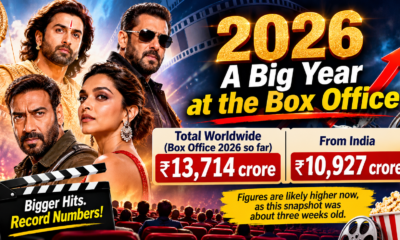
2026 is a big year at the box office
-

 Entertainment2 days ago
Ramayana Part 1 arrives this week.
-
 Entertainment2 days ago
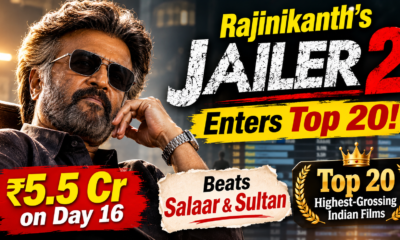
Rajinikanth’s Jailer 2 enters the top 20.
-
 Entertainment2 days ago
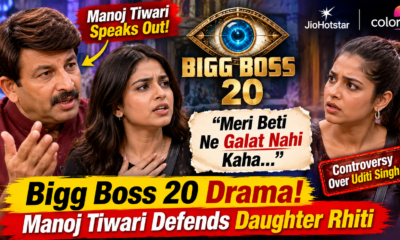
Bigg Boss 20 drama. Manoj Tiwari defended his daughter
-
 Entertainment2 days ago
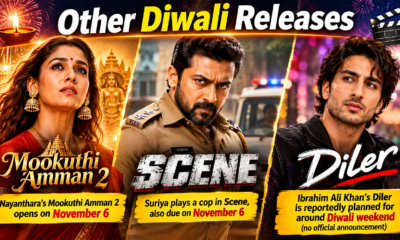
Other Diwali releases. Nayanthara’s Mookuthi Amman .