
Politics
India—US tariff and Russia-oil tension.
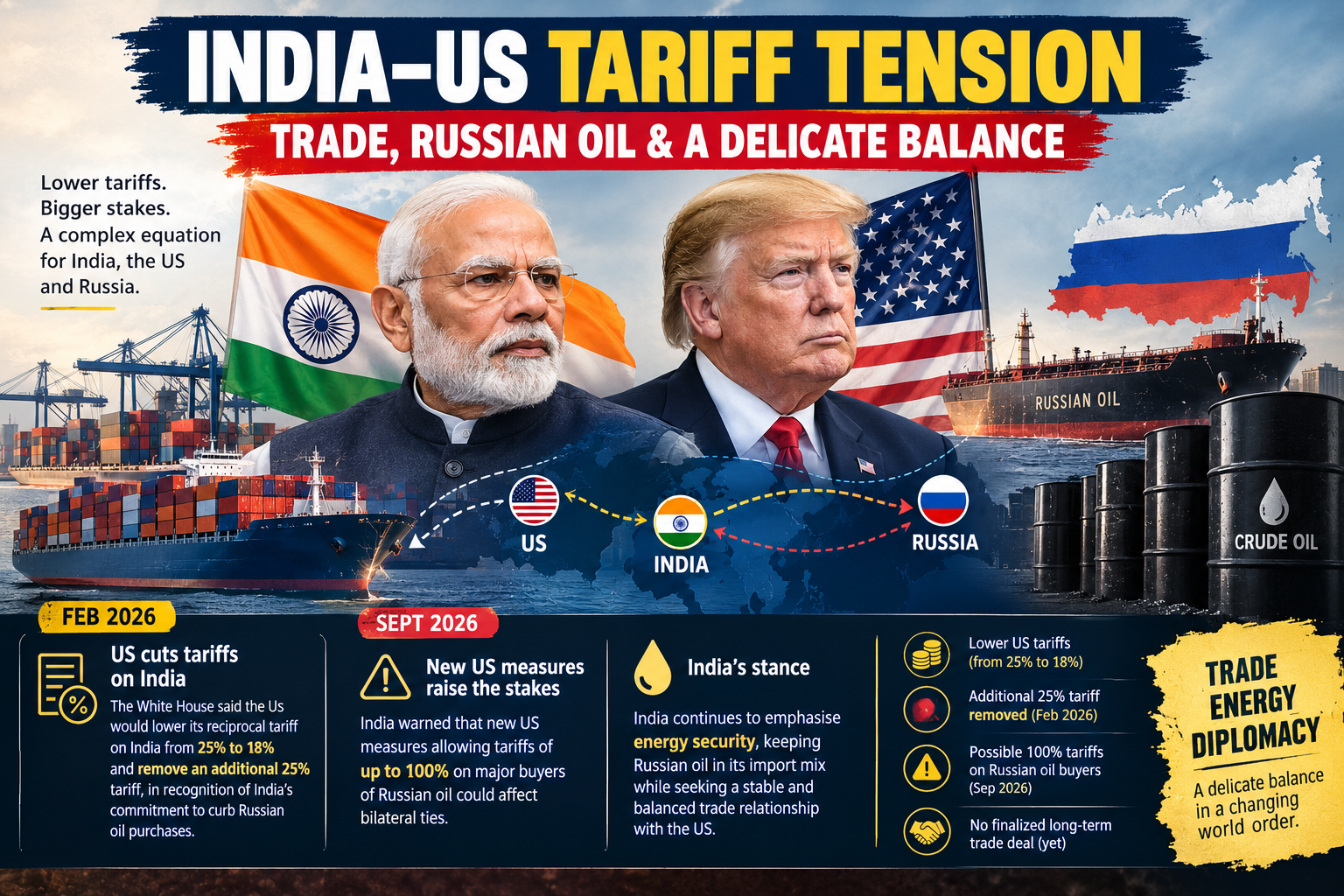
Tariffs, Russian oil and trade negotiations are reshaping the India–US relationship, creating a delicate balance between economic ties, energy security and strategic interests.

The February 2026 deal
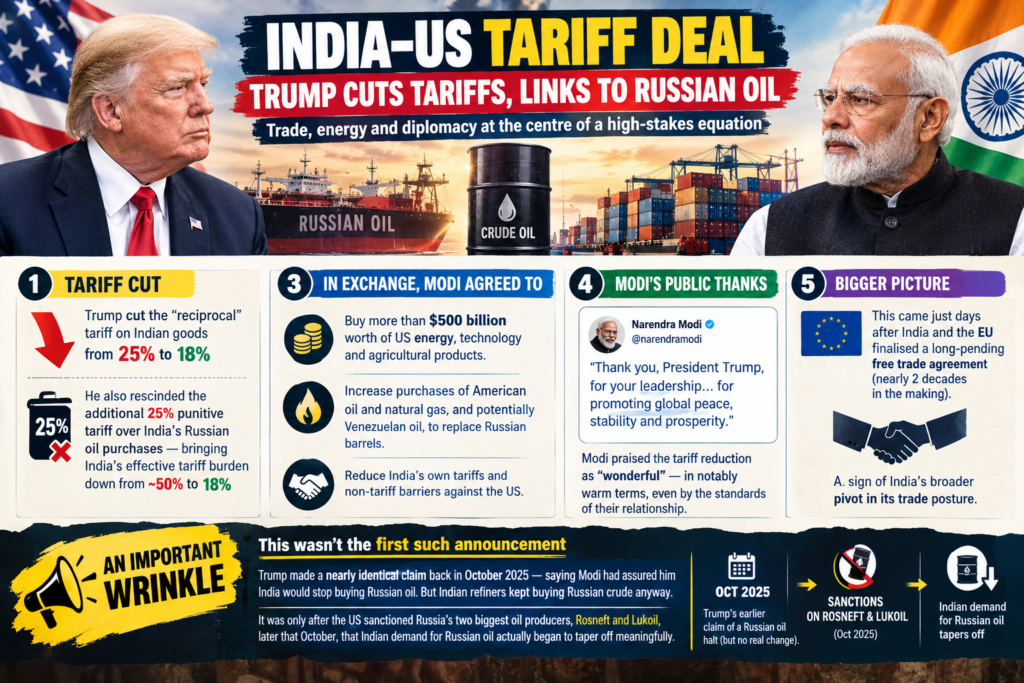
- President Trump announced he’d cut the “reciprocal” tariff on Indian goods from 25% to 18%, in a deal he framed as tied to India agreeing to stop buying Russian oil.
- Crucially, Trump also rescinded a separate, additional 25% punitive tariff he’d imposed specifically over India’s Russian oil purchases — so combined, India’s effective tariff burden dropped substantially from a stacked ~50% toward 18%.
- In exchange, Modi reportedly committed to:
- Buying more than $500 billion worth of US energy, technology, and agricultural products.
- Increasing purchases of American oil and natural gas, and potentially Venezuelan oil, to help replace Russian barrels.
- Reducing India’s own tariffs and non-tariff barriers against the US.
- Modi publicly thanked Trump on social media, calling the tariff reduction “wonderful” and crediting Trump’s “leadership” for “global peace, stability, and prosperity” — notably warm language even by the standards of the two leaders’ relationship.
- Context: this came just days after India and the EU concluded a long-pending free trade agreement (nearly two decades of negotiation), which added to the sense that India was making a broader pivot in its trade posture.
An important wrinkle: this wasn’t the first such announcement
The reporting flags that Trump had made a nearly identical claim back in October 2025 — saying Modi had assured him India would stop buying Russian oil — but Indian refiners kept buying Russian crude anyway. It was only after the US sanctioned Russia’s two biggest oil producers, Rosneft and Lukoil, later that October, that Indian demand for Russian oil actually began to taper off meaningfully. So there’s a pattern here: announced pledges followed by partial, lagged compliance, driven more by sanctions pressure than by the diplomatic pledge itself.
The scale of what was at stake
Russia supplied nearly 36% of India’s total crude imports in 2024 — about 1.8 million barrels per day of discounted oil, making India one of Russia’s largest oil customers post-invasion. Analysts noted that India’s relationship with Russia has historically centered more on defense (majority of India’s military hardware) than energy, with the oil-buying being a more opportunistic, post-2022 development exploiting discounted Russian crude.
Domestic political angle
This episode is relevant to the “vote chori”/SIR storyline we’ve been tracking in an indirect way: it’s part of the broader context of Modi’s foreign-policy standing being used by both supporters and critics as a data point in the larger narrative about his third term — supporters point to it as a diplomatic win, while critics (including some cited in Western coverage) called the deal “nothing to celebrate,” arguing it mainly serves US interests in countering Russia and benefits American exporters more than it reflects a genuine Indian policy shift.
What I don’t have confirmed
I don’t have reliable information on where India’s Russian oil purchases and the tariff relationship stand right now, in October 2026 — whether purchases have in fact dropped further, plateaued, or partially resumed. Want me to search specifically for the most recent (September/October 2026) status of India-Russia oil trade and whether the 18% tariff is still in effect?






Politics
Spain’s train crash and upcoming election. Spain is dealing with its second deadly train crash this year.
Spain faces its second deadly train crash this year, raising concerns over railway safety and public accountability ahead of the upcoming national election.

Spain’s second deadly high-speed train crash: a detailed look (as of October 31, 2026)
What happened
- The collision: On Wednesday, October 28, a high-speed train slammed into another that had stopped on the tracks in Toledo province. Both were heading from Madrid to Seville. The crash was near Urda.
- The toll: AP’s reports vary between 68 and 69 dead, and a Spanish official said the figure remained provisional. Dozens were injured, including at least six Canadians.
- The trains: One train struck another from behind. The IRYO train was stopped near Urda, and the RENFE train was about 15.5 miles behind it at one point.
The cause, as the government describes it
- The official account: Transport Minister Óscar Puente said the crash was caused by what he called an “inexplicable” order from the central command center after a security system had failed. He said the train engineers were not to blame.
- Caveat: This is the government’s early account, and the investigation is ongoing.
The earlier crash
- January: Forty-six people died when one train jumped the track and slammed into the side of another going the opposite way in southern Spain. The first reports put the toll at 43 and described it as Spain’s worst railway disaster since 2013.
- Same line: Both deadly crashes this year happened on the same rail line.
- Earlier warning: In August, the Spanish Union of Railway Drivers sent a letter asking the rail operator to investigate flaws on high-speed lines because of increased traffic.
Why it matters
- A system with a spotless record, until now: Spain’s high-speed network is the world’s second-largest, after China’s, and had no deadly crash in its three decades before this year. It carried 45 million travelers last year, including millions of tourists.
- Liberalisation context: Spain liberalised high-speed rail in 2021, and the Italian operator IRYO began service the next year.

The political fallout
- The election: Prime Minister Pedro Sánchez faces a national election on November 29. It is Spain’s first national election since 2023, and polls show him facing another uphill battle.
- Sánchez’s response: He said it was not acceptable for Spain to endure two high-speed train accidents in the same year, and called for safety reinforcements to rebuild trust. He visited the site twice and promised the state would stand with the victims’ families.
- Pressure on Puente: He faced media questions about whether he would resign after a second major wreck under his watch. Protesters gathered outside the Ministry of Transport to demand accountability.
- National mourning: The government declared three days of mourning starting Thursday. King Felipe VI called it a devastating blow and said measures must be adopted so it doesn’t happen again.
What I couldn’t find
- Opposition parties’ positions on the crash and on Puente. The excerpts I found didn’t cover them.
- A formal investigative finding. Only the minister’s early account was available.
Cautions for publishing
- State the toll as provisional, since sources give 68 and 69.
- Attribute the cause to Puente. Don’t present “human error” as a final conclusion.
- Don’t assume electoral effects. Polling impact is not established yet.
Politics
Tamil Nadu assembly bypolls, October 6
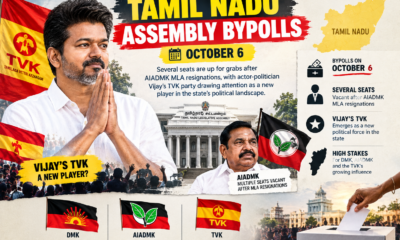
Tamil Nadu’s October 6 bypolls in Madurantakam and Dharapuram bring Vijay’s TVK into focus after two AIADMK MLAs switched parties.
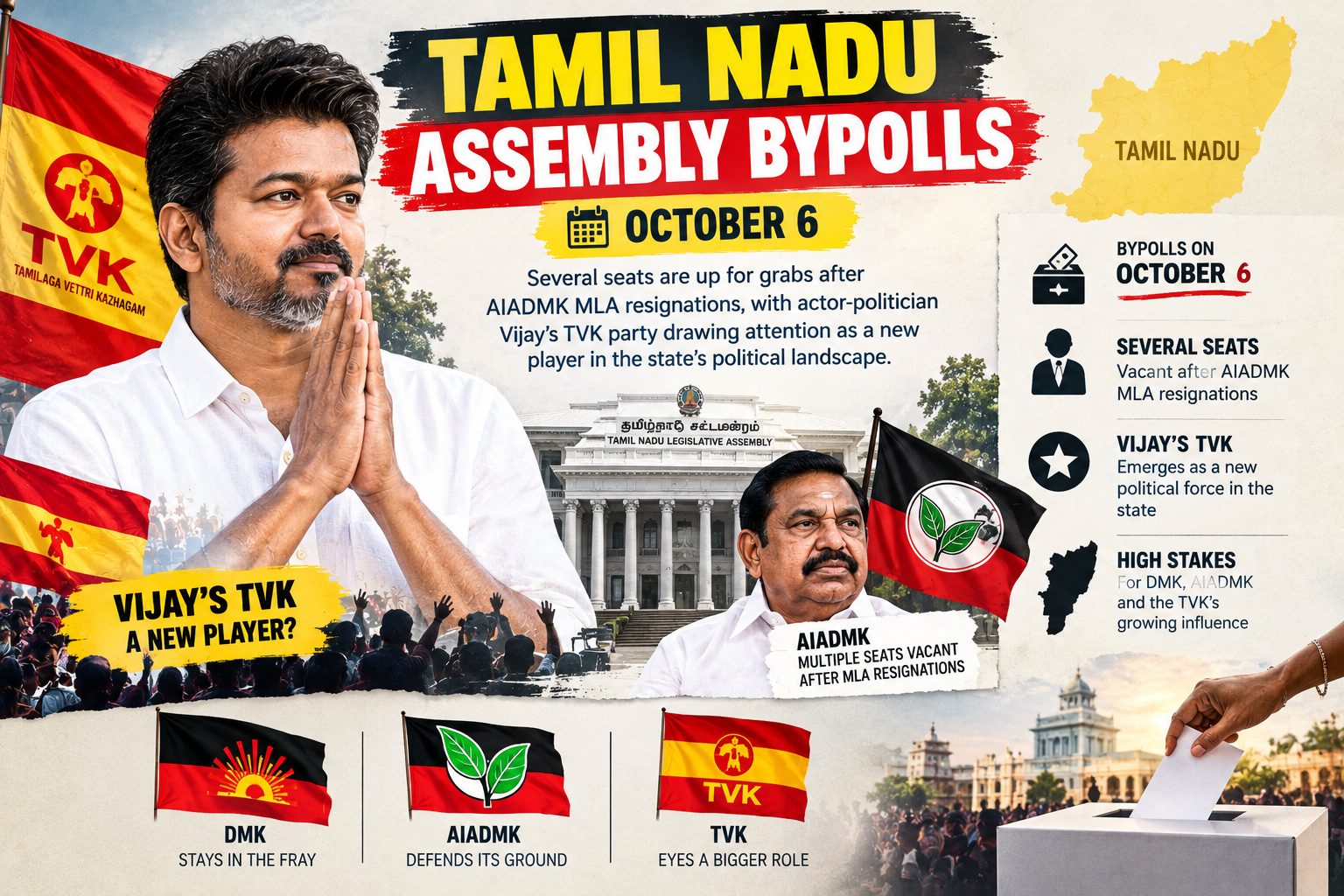
The 2026 Tamil Nadu election result (held April 23, 2026)
This was a watershed moment in Tamil Nadu politics:
- TVK (Tamilaga Vettri Kazhagam), Vijay’s party, emerged as the single largest party — the first time a non-Dravidian party has topped the Assembly since the 1960s, breaking the DMK-AIADMK duopoly that has defined the state for six decades.
- The result produced Tamil Nadu’s first hung assembly since 1952 — no party or alliance crossed the majority mark of 118 seats (out of 234).
- Vijay actually contested and won two seats simultaneously and became Chief Minister. AIADMK was pushed down to third place statewide.
- The AIADMK legislature party reportedly split during a trust vote in the new assembly — with some AIADMK MLAs voting in favor of the TVK government and others against — suggesting TVK’s government formation depended on at least partial AIADMK legislative support or defections.
How we got to the October 6 bypolls
Since the election, AIADMK has been bleeding MLAs to TVK:
- Vijay himself resigned one of his two winning seats (keeping Perambur, giving up Trichy East) since an MLA can only hold one seat.
- At least six AIADMK MLAs resigned their seats and formally joined TVK between May and August 2026, including K. Maragatham Kumaravel (Madurantakam), P. Sathyabama/Esakki Subaya (Dharapuram/related seat), and M.R. Vijayabhaskar (Karur).
- This brought the total vacant seats to seven.
The October 6 bypolls specifically
Two of those seven vacant seats are going to the polls now (the rest will presumably follow in later rounds):
- Madurantakam: TVK has fielded Maragatham Kumaravel — the same former AIADMK MLA who resigned and defected — to recontest the seat she previously held.
- Dharapuram: TVK has fielded P. Sathyabama, similarly a former AIADMK MLA now running for TVK.

Polling is October 6, with counting on October 9 and the election process required to be completed by October 11.
Why Dharapuram in particular matters
Dharapuram sits in western Tamil Nadu, a traditional AIADMK stronghold. In the 2026 general election, AIADMK actually won that seat with 40.56% of the vote (DMK second at 32.20%, TVK a distant third at just 23.23%) — meaning TVK is now trying to hold a seat there largely on the strength of the defected incumbent’s personal support, not because TVK was competitive in that constituency originally. CM Vijay has personally campaigned there, a sign the party sees it as genuinely contested.
What’s at stake for each party
- TVK: This is its first electoral test since actually forming a government — a strong showing would validate its legitimacy as a ruling party rather than a flash-in-the-pan phenomenon built on star power.
- AIADMK: Trying to reclaim seats it lost purely to defections (not to voters), and has reportedly sought support from alliance partners including the BJP.
- DMK: Positioned as the main opposition now, looking to capitalize on a multi-cornered contest.
The results, expected October 9, will be an early read on whether Vijay’s film-star-turned-politician government is actually holding public support or whether the hung-assembly coalition is fragile.
Politics
Fallout from the Gen-Z “Cockroach” protests.
The NEET crisis sparked weeks of youth-led protests and culminated in Dharmendra Pradhan’s resignation. The movement’s political aftershocks continue.

Origins (May 2026)
The movement began as political satire. On May 15, 2026, Chief Justice of India Surya Kant made remarks comparing unemployed youth and social media activists to “cockroaches” and “parasites” — a comment that drew widespread public criticism. The next day, May 16, digital communications strategist Abhijeet Dipke founded the “Cockroach Janta Party” (CJP) online as satire, with the name deliberately echoing the BJP’s own name (“Indian People’s Party” vs. “Cockroach People’s Party”). The CJP’s official X account was withheld in India just five days later, on May 21.
The NEET protest phase (June–July 2026)
- The movement’s satirical framing gave way to a serious, sustained protest after the May NEET (medical entrance exam) paper leak affected roughly 2 million candidates.
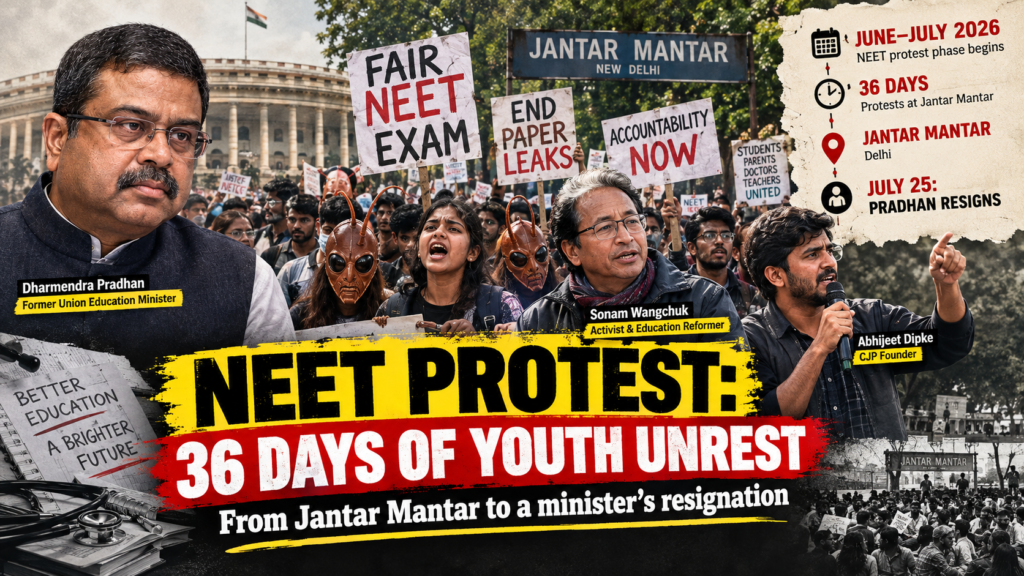
- Protests began June 6, centered at Jantar Mantar in Delhi, and ran for 36 consecutive days.
- Dipke was joined at points by activist and education reformer Sonam Wangchuk.
- The protest drew students, parents, doctors, lawyers and teachers; some wore cockroach masks as a pointed callback to the CJI’s remark.
- Dipke alleged authorities might stage disruptions and blame CJP for them, posting photos of lorries he claimed were loaded with stones near the protest site.
- The core demand — Dharmendra Pradhan’s resignation — was met on July 25, 2026, along with compensation commitments for families of students who died by suicide linked to the exam chaos. This was widely treated as a major, rare win against the Modi government.
The pivot: CJP vs. the Election Commission (current, last ~10 days)
This is the live part of the story:
- On September 25, 2026, Dipke held a press conference calling CEC Gyanesh Kumar “the biggest threat to India’s democracy,” tying the SIR voter-roll deletions directly to his earlier anti-establishment framing — arguing the process “has given the government the power to select who can vote, rather than empowering voters to choose the government.”
- He set an ultimatum: CJP would launch a nationwide protest starting October 2 if Kumar didn’t resign by the preceding Saturday.
- Rahul Gandhi publicly joined CJP’s call for Kumar’s resignation that same day — a notable moment of convergence between the satirical youth movement and mainstream opposition politics.
- Dipke claims roughly 13 crore (130 million) voters have been deleted from rolls since 2024 — a figure close to Congress’s own 13.3 crore claim from the CWC resolution we discussed earlier, suggesting coordinated messaging between CJP and Congress.
- CJP’s specific demands now include: Kumar’s resignation, freezing the 2025 electoral roll as the basis for future elections, and a transparent, civil-society-involved process for appointing the next Election Commissioner.
- Just today/yesterday, CJP had to publicly deny reports that Dipke was detained by Mumbai police at Marine Drive ahead of the planned protest, dismissing the claims as “fake.”
Why this matters
What started as a satirical response to one judge’s offhand comment has evolved into a recurring pressure campaign that’s twice now forced real political consequences (a minister’s resignation, and now direct engagement from the Leader of the Opposition on CEC removal). It’s effectively become a youth-led flank of the broader “Vote Chori” fight we’ve been tracking — meaning the CJP, Congress-led INDIA bloc, and now a sitting state government (Karnataka) are all converging on the same Election Commission target simultaneously.


Spain’s train crash and upcoming election. Spain is dealing with its second deadly train crash this year.

Hong Kong’s Tai Po fire fallout. Leader John Lee apologized

Serbia’s media shake-up. The head of public broadcaster RTS resigned after the student list won an election.

Generation Z Is Killing Fast Fashion in India — And Building Something Far More Beautiful in Its Place

AR Rahman reacts to “anti-national” row over Imtiaz Ali’s Main Vaapas Aaunga

According to Dior Couture, this taboo fashion accessory is back

-

 Entertainment14 hours ago
2026 is a big year at the box office
-
 Entertainment15 hours ago
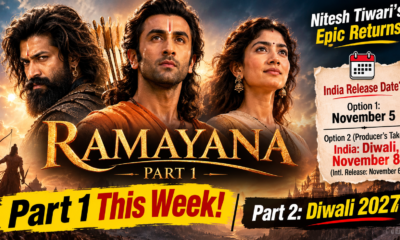
Ramayana Part 1 arrives this week.
-
 Entertainment14 hours ago
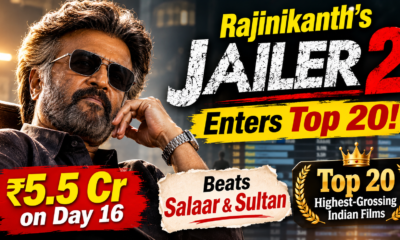
Rajinikanth’s Jailer 2 enters the top 20.
-

 Entertainment14 hours ago
Bigg Boss 20 drama. Manoj Tiwari defended his daughter
-

 Entertainment14 hours ago
Other Diwali releases. Nayanthara’s Mookuthi Amman .