
Entertainment
CBFC Censorship Controversy Around Haiwaan
Haiwaan reportedly faces 45–50 CBFC cuts, including dialogue changes, reigniting debate over creative freedom and censorship standards in Indian cinema.


Correction: The Actual Number of Changes Was Much Smaller
Based on detailed reporting (including an exclusive breakdown from Bollywood Hungama), the CBFC’s Examining Committee required just a handful of specific modifications — not 45-50 cuts. There’s no source suggesting a figure anywhere near that scale; this appears to be a misreported or conflated number. The actual changes were:
- One visual in the first half of the film was “suitably modified” (not cut).
- One derogatory sentence, occurring around the intermission, was deleted and replaced with: “Dimaag ki vaat laga ke rakh di” (loosely: “Messed up my mind”).
- One word in the second half was deleted and replaced with “Kamina” (meaning “scoundrel”).
- One “derogatory” term, in the post-interval portion, was replaced with “Girlfriend.”
Crucially, no visual cuts were enforced by the CBFC — meaning all the film’s action sequences and thriller visuals remained fully intact. This was purely a dialogue/language-level intervention, not scene removal.
About the Film
Haiwaan (meaning “Beast”) is a Hindi-language neo-noir crime thriller directed by Priyadarshan, notably a remake of his own earlier 2016 Malayalam film, Oppam. It stars Akshay Kumar, Saif Ali Khan, Boman Irani, Shriya Pilgaonkar, and Saiyami Kher, with Mohanlal making a cameo appearance (a nice touch given Mohanlal starred in the original Oppam). Produced by Venkat K Narayana and Shailaja Desai Fenn under KVN Productions and Thespian Films, it’s a thriller centered on a series of deaths, fear, and revenge — with Saif Ali Khan playing a visually impaired character and Akshay Kumar taking on the antagonist role.
Certification Details
- The CBFC certified the film with a U/A 16+ rating on September 8, 2026, just three days ahead of its September 11, 2026 theatrical release.
- The certified runtime is 164.07 minutes (2 hours, 44 minutes, 7 seconds).

The Bigger Censorship Context
While Haiwaan’s own changes were relatively minor in scale, this story fits into a genuinely larger, ongoing national conversation about CBFC censorship standards:
- A much more severe case is currently playing out with Tamil director Vetrimaaran’s film “Manushi,” which faced a demand for 37 cuts and modifications from the CBFC, which Vetrimaaran publicly opposed as “excessive and arbitrary.” That dispute escalated all the way to the Madras High Court, which ordered a private screening with both CBFC and the producer present, and ultimately the court itself ordered 25 cuts (reduced from the CBFC’s original 37) — a much more serious legal confrontation than anything reported around Haiwaan.
- This broader pattern — filmmakers increasingly challenging CBFC decisions in court rather than simply complying — reflects growing industry pushback against what many see as inconsistent or overly subjective certification standards in Indian cinema.
Why This Story Is Worth Covering Carefully
Given the actual facts don’t support a “45-50 cuts” framing, your channel should probably present this as “CBFC required a small number of specific dialogue changes, not mass cuts” — the real story here is less about censorship severity and more about the often-quirky, sometimes unintentionally comedic nature of CBFC’s specific word-replacement choices (like “Kamina” and “Girlfriend” as substitutes), which is a recurring source of public amusement and mild criticism of the board’s approach. If you want a genuinely severe censorship controversy story for contrast, the Manushi/Vetrimaaran High Court case is the stronger, more serious angle.




Entertainment
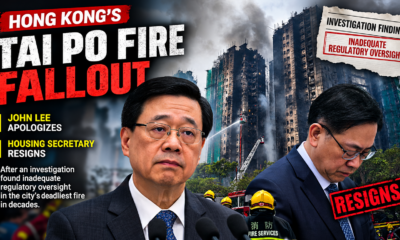
Hong Kong’s Tai Po fire fallout. Leader John Lee apologized
Hong Kong’s Tai Po fire triggers political fallout as John Lee apologizes and the housing secretary resigns following findings of inadequate regulatory oversight.

Hong Kong’s Tai Po fire fallout: a detailed look (as of October 31, 2026)
What happened
- The fire: It ravaged a residential tower complex in Tai Po in November 2025, killing 168, injuring 79 and displacing thousands. It tore through seven 31-story blocks at Wang Fuk Court, which was undergoing renovation and wrapped in dust netting and scaffolding.
- The wait: Many former residents spent nearly a year waiting to see how the government would address accountability.
The independent committee’s findings (released October 29)
- Cause: The report said evidence pointed to a lit cigarette. The fire started on a flat roof between two first-floor apartments in Wang Cheong House, and there was substantial evidence that construction workers smoked on site, including on the scaffolding.
- Why it spread: Experts found that foam boards, non-fire-retardant scaffolding nets and canvases contributed.
- Regulatory failure: The committee found deficiencies in supervision by the Housing Bureau’s independent checking unit, the Buildings Department, the Fire Services Department and the Labor Department. It said deception succeeded because the regulators’ own practices enabled it.
- Misconduct: The report also noted features pointing to bid-rigging and related misconduct at Wang Fuk Court.
- Earlier warnings: The fire came after more than a year of safety complaints.

The political response
- Apology: Lee and seven other top officials bowed in apology at the start of the news conference. Lee apologised to victims and the public and promised comprehensive reforms so that similar incidents will never be allowed to happen again. The AP called it a rare apology.
- Resignation: Housing Secretary Winnie Ho resigned on Wednesday. Lee said she should bear political responsibility, although no personal wrongdoing was found. She is the first official to resign over the fire.
- More to come: A three-month investigation will determine whether government employees were derelict in their duties. All four agencies are under it.
- An expert view: John Burns of the University of Hong Kong called the apology very significant. NBC framed the episode as testing Beijing’s grip on the city.
What I couldn’t confirm
- Ho’s successor. I found no report naming one.
- Reactions from victims’ families or critics. The sources I found contained little on them.
Cautions for publishing
- Cause versus accountability. The cigarette finding is the committee’s evidence-based conclusion, and the regulatory failings are a separate finding. Keep them distinct.
- “Derelict in duties” isn’t a finding yet. The three-month investigation hasn’t reported.
- Use “committee found.” Don’t state these conclusions as your own.
Entertainment
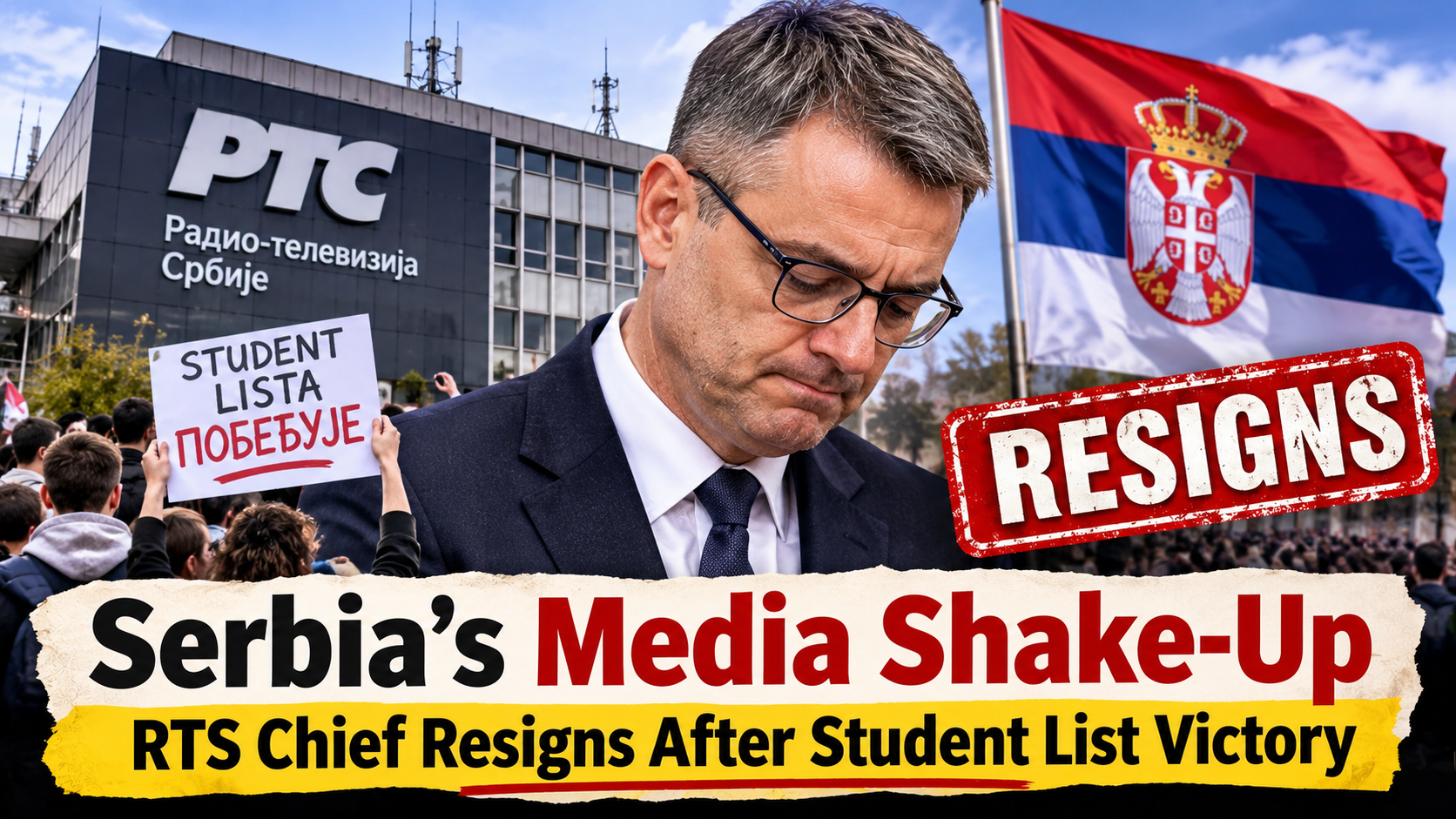
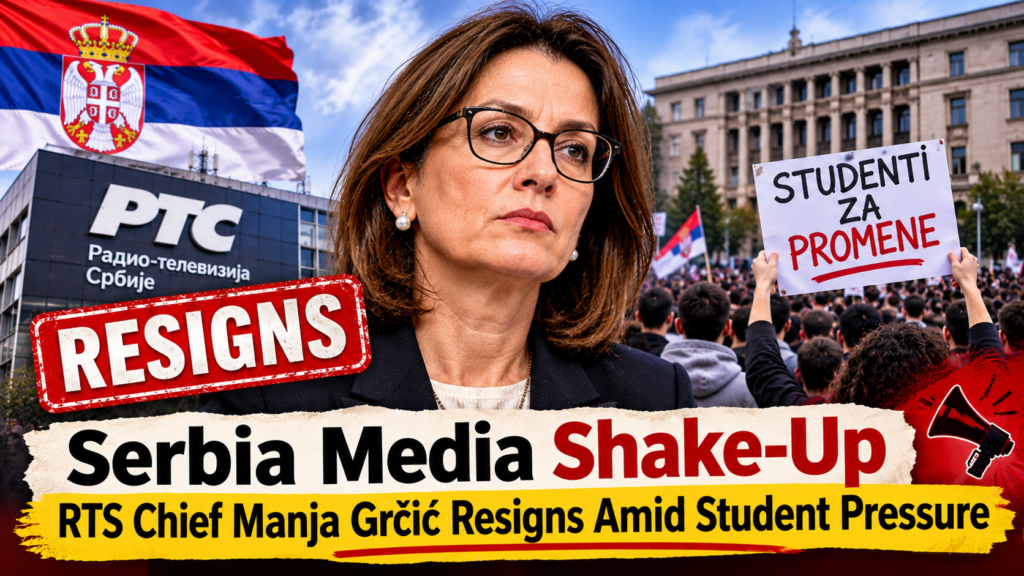
Serbia’s media shake-up. The head of public broadcaster RTS resigned after the student list won an election.
RTS Director-General Manja Grčić has resigned amid pressure from Serbia’s Student List and employee unions, bringing renewed attention to media independence and political influence in the country.
Serbia’s media shake-up: a detailed look (as of October 31, 2026)
This is a bigger story than my earlier one-line summary suggested. The RTS resignation is one consequence of a change of government.
The election
- The result: On October 25, the Student List won the snap parliamentary election, and Aleksandar Vučić conceded defeat. The electoral commission’s latest update gave the list 140 of 250 seats and Vučić’s SNS 104, though the result was not yet final and parliament could not convene. Vote-share figures vary by source, at roughly 52–53% for the winners.
- Where the movement came from: It grew out of two years of protests that began after the 2024 Novi Sad railway station canopy collapse, which killed 16 people.
- Vučić’s position: He has dominated Serbian politics as prime minister or president since 2014. He sought a return to the prime minister’s office in this election.
The RTS resignation
- What happened: Director-General Manja Grčić resigned on October 28 after the Student List and employee unions demanded the removal of the leadership. She had ruled out stepping down a day earlier.
- Her stated reason: She said she knew that some of the public saw her staying in office as “temporarily” an obstacle to change, and she asked the managing board to ensure a lawful handover.
- Her background: She became head of RTS in February 2026 on a five-year term and was the first woman to hold the post.
- Before leaving: She fired the editor-in-chief of RTS’s news program and proposed a replacement.
- The pressure: The Student List sent RTS an open letter the day before, listing removing political influence among its key priorities. On October 28, a Student List candidate appeared on RTS’s main evening news for the first time and criticised its coverage of the movement.
- The precedent: The director of regional broadcaster RTV Vojvodina resigned first, and a presenter apologised on air for years of one-sided reporting.
The wider media picture
- Ranking: Reporters Without Borders ranked Serbia 104th of 180 countries in the 2026 index, its lowest ever.
- Coverage: Election monitor Crta found the Student List was portrayed negatively more than 80% of the time it was discussed on TV.
- A warning: RSF warned that losing the independence of the outlets N1 and Nova would complete media capture at a crucial moment.
- A regional parallel: Reuters noted the move echoed Hungary’s main state TV channel, which in July, after Orbán’s defeat in April, displayed a black screen saying public media cannot lie.
What’s next
- Who runs RTS: Speculation is mounting, and no successor is named.
- More demands: On Thursday the movement called for resignations of leading public figures and investigations into alleged corruption during Vučić’s tenure.
- The government: The Student List can form a majority on its own, and a government must be formed within 90 days after parliament convenes. It didn’t name a prime minister during the campaign. Lead candidate Ilija Srđanović, a cardiologist and professor, is the subject of public speculation.
- Foreign policy: The list says it will keep Serbia’s stance against sanctions on Russia while backing Ukraine’s territorial integrity. The result could signal closer EU ties.
Cautions for publishing
- Results aren’t final, so seat counts could change.
- Attribute the framing. “Depoliticisation” is the Student List’s and the unions’ demand. Describe it as their position.
- Quote Vučić carefully. One outlet reports he blamed independent media, European governments and an “American deep state,” but I found that in only one source, so verify it before publishing.
Entertainment
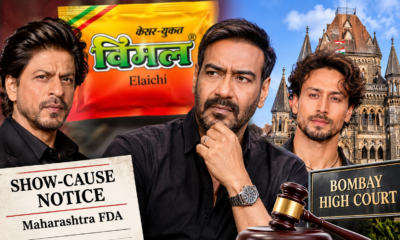
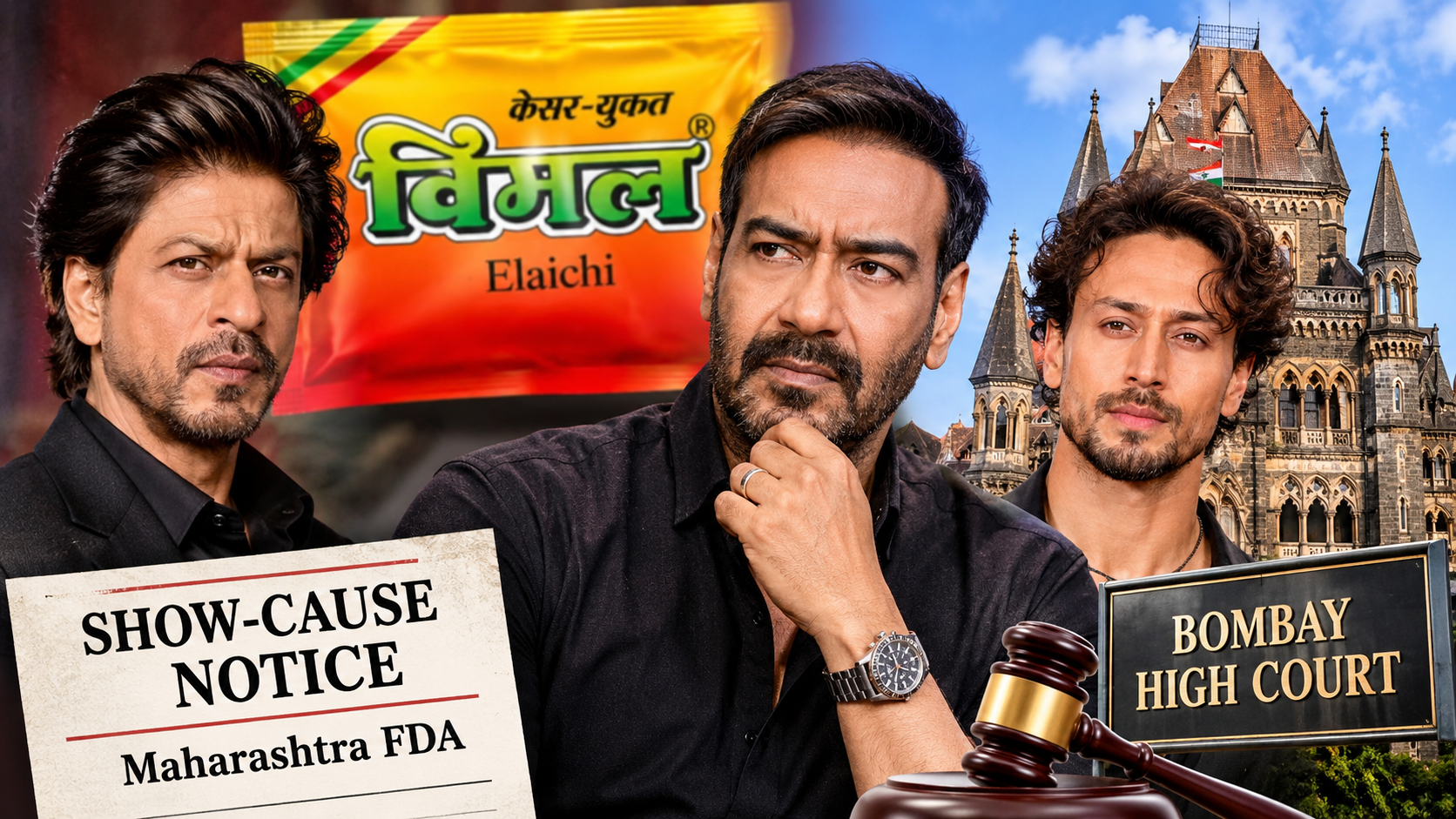
The Vimal Elaichi ad row.
Ajay Devgn has approached the Bombay High Court challenging the Maharashtra FDA’s notice over the Vimal Elaichi advertisement controversy. The hearing is expected on November 4.
The Vimal Elaichi ad row: a detailed look (as of October 31, 2026)
What this is about
The Maharashtra FDA alleges that Vimal Elaichi (cardamom) advertisements featuring three major stars are really promoting Vimal Pan Masala, which is banned in the state. Regulators call that “surrogate advertising.” The actors have not been found guilty of anything. The case has not yet been adjudicated.
Timeline
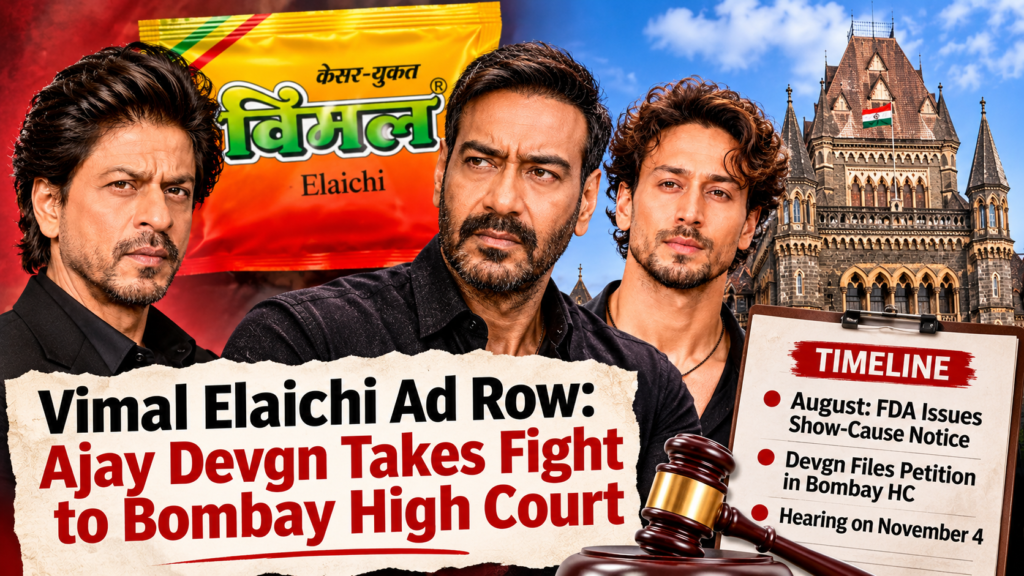
- August: The Maharashtra FDA issued a show-cause notice to Shah Rukh Khan, Ajay Devgn and Tiger Shroff, alleging that the ad prima facie amounts to indirect or surrogate promotion of prohibited pan masala. The actors had 15 days to respond. It was a nine-page notice.
- What the FDA demanded: It directed the actors to stop taking part in the campaign and to remove related promotional material from their social media accounts.
- The maker’s challenge: PB Agro, which makes Vimal Elaichi, went to the Delhi High Court in August to quash the notices. The court dismissed the plea, ruling it lacked territorial jurisdiction.
- The actors’ responses: All three responded, and two sought personal hearings, which were completed on September 28.
- Devgn goes to court: He approached the Bombay High Court, challenging the notice over his Vimal Elaichi endorsement. He has questioned why he was targeted instead of the company behind the brand. He has also questioned the legal provisions and the action against actors instead of manufacturers. The petition is expected to be heard on November 4.
- FDA closes its proceedings (today): Commissioner Tukaram Mundhe said the proceedings are closed and the designated officer proposes adjudication before the Joint Commissioner, the competent authority. He said that would happen next week.
Where it stands
- Two tracks run in parallel. The FDA’s adjudication before the Joint Commissioner is a separate matter from Devgn’s High Court petition.
- No penalty announced. As of the latest reports, no final decision or penalty had been announced.
- Media framing varies. One outlet says the FDA “finds rule violations,” but Mundhe’s statements, as reported, describe closing the proceedings and sending the cases for adjudication. Avoid stating a violation as established.
Background and reactions
- Not a new row. In an earlier controversy over the same ad, Akshay Kumar apologised after online backlash, and a Goa BJP leader urged the Prime Minister to strip the actors of their Padma Awards. Devgn defended his association then, calling it a personal choice and saying he did “elaichi.”
- Current criticism. Actor Mukesh Khanna has criticised the three stars and backed the FDA’s notices.
Cautions for publishing
- Say “alleged.” The FDA alleges surrogate advertising, and the actors dispute it.
- Check the hearing date. November 4 is “expected,” so confirm it before you publish.
- The Delhi High Court ruling was only on jurisdiction. It did not decide the merits.
- Don’t speculate on penalties. No outcome has been announced.


Spain’s train crash and upcoming election. Spain is dealing with its second deadly train crash this year.

Hong Kong’s Tai Po fire fallout. Leader John Lee apologized

Serbia’s media shake-up. The head of public broadcaster RTS resigned after the student list won an election.

Generation Z Is Killing Fast Fashion in India — And Building Something Far More Beautiful in Its Place

AR Rahman reacts to “anti-national” row over Imtiaz Ali’s Main Vaapas Aaunga

According to Dior Couture, this taboo fashion accessory is back

-

 Entertainment14 hours ago
2026 is a big year at the box office
-

 Entertainment15 hours ago
Ramayana Part 1 arrives this week.
-
 Entertainment15 hours ago
Rajinikanth’s Jailer 2 enters the top 20.
-

 Entertainment14 hours ago
Bigg Boss 20 drama. Manoj Tiwari defended his daughter
-

 Entertainment14 hours ago
Other Diwali releases. Nayanthara’s Mookuthi Amman .